Oxygen is essential for life in aquatic environments, supporting the organisms and biological processes that keep water systems functioning. In a pond, much of this oxygen exists in a form known as dissolved oxygen (DO), meaning oxygen molecules present within the water rather than in the surrounding air. Oxygen levels can naturally change throughout the day and may be influenced by factors such as temperature, sunlight, water movement, plant activity, and organic matter. Understanding how dissolved oxygen behaves provides valuable insight into pond water conditions and overall aquatic health. Let’s ascertain the importance of dissolved oxygen in maintaining a healthy pond environment.
Dissolved Oxygen Pond OverviewDissolved oxygen is essential for fish, amphibians, insects, and other aquatic organisms that depend on oxygen for respiration and survival. Its concentration is influenced by temperature, water movement, sunlight, atmospheric conditions, organic matter, nutrients, and biological activity. Low oxygen can cause stress and fish mortality, while adequate levels support a stable pond ecosystem. Aeration, circulation, and regular monitoring can help maintain suitable oxygen conditions, particularly during periods of increased oxygen demand. |
What Is Dissolved Oxygen in a Pond?
Dissolved oxygen (DO) refers to oxygen molecules present in pond water in a free, non-compound form. Unlike oxygen bound within chemical compounds, this dissolved oxygen is directly available for aquatic organisms to use during respiration. It enters pond water through atmospheric exchange, photosynthesis, and water movement. DO is commonly measured in parts per million (ppm), which is equivalent to milligrams per liter (mg/L). Its concentration is not fixed; it varies with water temperature, atmospheric conditions, depth, and biological activity within the pond.
Why Is Dissolved Oxygen Essential for a Healthy Pond?
Why is dissolved oxygen important for aquatic life? The answer lies in its role in supporting essential biological functions
Supports Aquatic Respiration
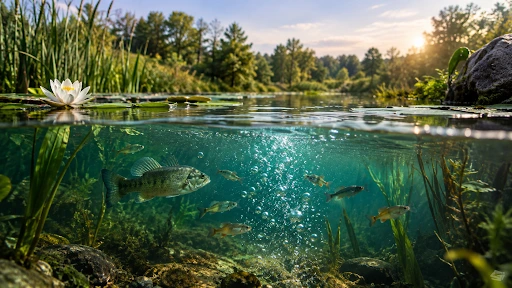
Fish, amphibians, aquatic insects, and other animals rely on dissolved oxygen for respiration. Fish extract oxygen as water passes over their gills, while other organisms use specialized respiratory structures or surfaces. In ponds where oxygen becomes depleted, inadequate aeration can contribute to severe oxygen stress and sudden fish losses, as documented in this pond aeration and fish die-off case study.
Prevents Oxygen-Related Stress
When dissolved oxygen falls, aquatic organisms can experience respiratory stress before mortality occurs. Fish may increase gill movement, gather near the surface, or gulp air. The U.S. Environmental Protection Agency notes that DO below 5 mg/L can stress fish, while concentrations below 3 mg/L may be too low to support them.
Supports Growth and Reproduction
Adequate dissolved oxygen contributes to essential biological processes, including fish growth, activity, and reproduction. Low DO can interfere with these functions even before conditions become immediately lethal. Oxygen requirements vary among species and life stages, so maintaining suitable concentrations helps provide a more stable environment for the pond’s aquatic community.
| If you’re looking for a practical way to support oxygen movement, explore Friendly Fountains’ floating pond fountains designed to combine water movement with an attractive display. |
Factors That Affect Dissolved Oxygen Levels
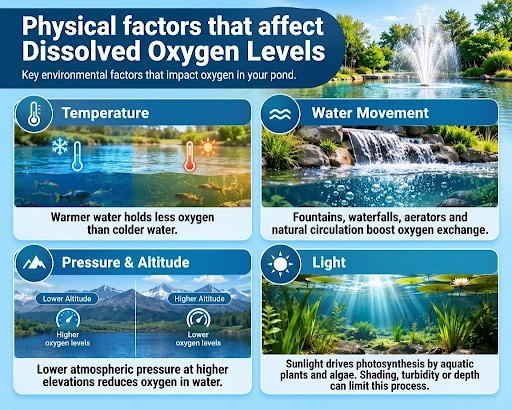
Physical Factors
- Water Temperature: Warmer pond water holds less dissolved oxygen than colder water. Seasonal warming can therefore reduce oxygen availability, particularly during hot weather.
- Water Movement: Fountains, waterfalls, aerators, and natural circulation promote gas exchange at the water surface. Poor circulation can allow oxygen-depleted areas to develop.
- Atmospheric Pressure and Altitude: Lower atmospheric pressure at higher elevations reduces the amount of oxygen that water can hold at equilibrium with the surrounding air.
- Light Availability: Sunlight controls photosynthetic oxygen production by aquatic plants and algae. Shading, turbidity, or excessive depth can limit this process.
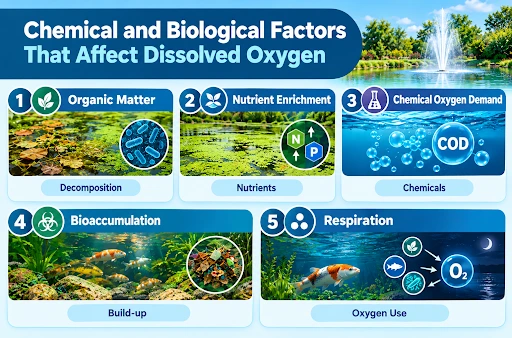
Chemical and Biological Factors
- Organic Matter: Leaves, algae, fish waste, and other biodegradable material provide food for microorganisms. Their decomposition consumes dissolved oxygen and can increase the pond’s biochemical oxygen demand (BOD).
- Nutrient Enrichment: Excess nitrogen and phosphorus can stimulate excessive algae and plant growth. When this biomass dies, microbial decomposition increases oxygen consumption and may contribute to hypoxic conditions.
- Chemical Oxygen Demand: Certain organic and inorganic substances require oxygen during chemical reactions. A higher chemical oxygen demand (COD) indicates greater potential oxygen consumption.
- Bioaccumulation: Accumulation of organic residues and pollutants can alter biological activity and contribute indirectly to oxygen depletion, particularly when accumulated material undergoes decomposition.
Respiration: Fish, plants, algae, and microorganisms continuously consume oxygen, with oxygen demand often becoming more significant at night when photosynthesis stops.
How to Maintain Optimal Dissolved Oxygen in Your Pond
Aerate the Pond Water
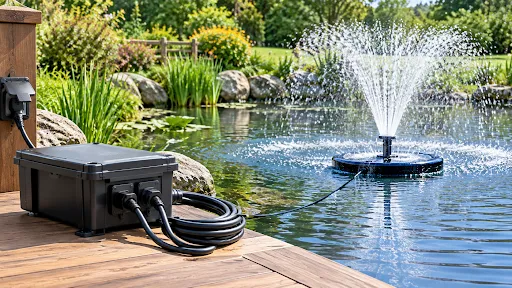
Aeration increases oxygen transfer by circulating pond water and exposing more of its surface to the atmosphere. Floating pond fountains can create continuous movement and surface agitation, helping maintain oxygen availability where natural circulation is limited.
Maintain Consistent Water Circulation
Consistent circulation helps distribute oxygen throughout different areas of the pond rather than allowing stagnant, oxygen-poor zones to develop. Properly positioned aeration equipment can improve mixing between surface and deeper water, supporting more uniform dissolved oxygen conditions.
Monitor Oxygen During High-Demand Periods
Warm water, nighttime respiration, and decomposition of organic matter can increase oxygen demand. Monitoring dissolved oxygen during these periods can identify declining levels early, allowing aeration to be adjusted before aquatic organisms experience oxygen stress.
Conclusion
If you’re wondering, is dissolved oxygen good? Maintaining adequate oxygen levels is an important part of supporting a healthy pond environment. Friendly Fountains offers floating pond fountains designed to promote water movement and aeration while adding visual appeal. Explore our fountain solutions to improve circulation, support oxygenation, and keep your pond functioning beautifully.
| Looking for ways to support healthy dissolved oxygen levels in your pond? Friendly Fountains is here to help you find an aeration solution suited to your pond’s needs. |
Faq’s About Dissolved Oxygen
How do you measure dissolved oxygen in a pond?
Dissolved oxygen can be measured using a calibrated DO meter or chemical test kit, with results typically reported in milligrams per liter.
What time of day is pond oxygen lowest?
Pond dissolved oxygen is generally lowest shortly before sunrise because nighttime respiration continues while photosynthesis has stopped.
Can too much dissolved oxygen harm pond fish?
Extremely high dissolved oxygen can cause gas supersaturation under unusual conditions, although oxygen deficiency is generally the more common concern in ponds.
Do algae increase or decrease dissolved oxygen?
Algae can increase oxygen through daytime photosynthesis but consume oxygen through respiration, particularly at night; decomposition after algal die-offs can further reduce DO.
What causes a sudden drop in pond oxygen?
Rapid oxygen declines can follow algae die-offs, prolonged cloudy weather, hot conditions, heavy organic decomposition, or other events that increase oxygen consumption.