Recurring green water or floating algae can affect a pond’s clarity, aquatic life, and overall appearance. To address this problem, many pond owners consider floating fountains as a practical way to improve water conditions. But does a floating fountain help with pond algae, and how much of a difference can it actually make? While fountains promote water movement and oxygen exchange, algae growth depends on several other factors, including overall pond conditions. Thus, by understanding these factors, you can get an effective solution for algae control in fountains. This guide explains how floating fountains influence algae growth, the specific benefits they offer, and the situations in which they can help manage recurring pond algae.
Understanding Pond Fountains and Algae Control SummaryFloating pond fountains improve water circulation, support oxygen exchange, and help maintain healthier pond conditions. Their surface agitation can reduce stagnant areas and disrupt algae accumulation, while consistent aeration supports aquatic life and natural nutrient processing. Effective algae management also depends on controlling excess nutrients, maintaining suitable oxygen levels, and understanding pond depth. Choosing the right fountain system helps support water quality and provides ongoing assistance in managing recurring algae growth. |
The Role of Water Movement and Aeration in Algae Control
Consistent water movement and aeration help maintain balanced pond conditions, supporting clearer water and limiting conditions that encourage algae growth. These processes are important for controlling algae in fountains and the ponds they serve.
Continuous Water Circulation
Water circulation keeps the pond moving instead of allowing stagnant areas to develop. Pumps, floating pond fountains, and circulation systems distribute water throughout the pond, helping maintain more consistent conditions from the surface to deeper areas.
Oxygen Distribution
Aeration introduces oxygen into the water and distributes it through circulation. Higher dissolved oxygen supports aquatic organisms and beneficial microorganisms that contribute to natural nutrient processing within the pond.
Nutrient Distribution
Water movement helps distribute nutrients throughout the pond rather than allowing concentrated areas to develop. This supports more consistent water conditions and helps with algae prevention in fountains by limiting stagnant areas where algae-friendly conditions may develop.
Surface Agitation
Fountains and other aeration systems disturb the water surface, improving contact between water and air. This promotes gas exchange while keeping the upper water layer actively circulating, supporting algae control in fountains through continuous surface movement.
Consistent Water Conditions
Regular circulation and aeration create a more balanced aquatic environment by maintaining oxygen movement, water circulation, and nutrient distribution. Together, these processes support overall pond health and contribute to effective algae management.
| Enhance your pond with reliable fountain solutions designed for better circulation, improved aeration, and long-term water quality. |
Key Factors That Influence Fountain-Based Algae Control
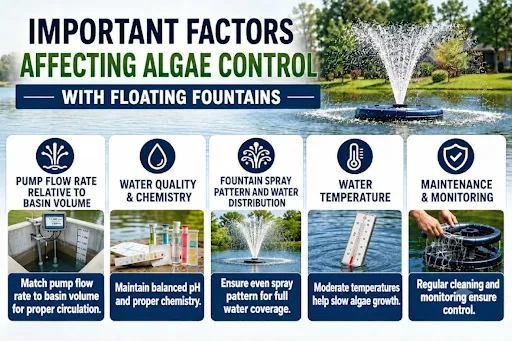
The effectiveness of a floating fountain in managing pond algae depends on more than water movement alone. Pond depth, nutrient levels, sunlight exposure, and fountain placement all influence how well the system supports water quality. Understanding these factors helps pond owners set realistic expectations and identify where additional management may be needed. A suitable fountain can improve circulation and surface aeration, but controlling excess nutrients and maintaining appropriate oxygen levels remain important for limiting persistent algae growth.
How Effective Are Floating Fountains for Preventing Pond Algae?
From disrupting surface accumulation to limiting nutrient availability, floating fountains can help reduce several factors associated with recurring algae problems. Thus, understanding their specific benefits helps set realistic expectations for what they can achieve in different pond conditions.
Breaks Up Surface Algae Before It Forms Thick Scums
Once algae starts collecting on the surface, it can form a concentrated layer or scum. The fountain’s spray creates turbulence as the water falls back into the pond, breaking up these concentrated patches and spreading the biomass through the surrounding water. This can help stop algae in fountains from accumulating into thick, continuous surface mats, although it does not eliminate the algae itself.
Reduces Phosphorus Released From Pond Sediment
When the bottom of a pond becomes low in oxygen, phosphorus can be released from the sediment into the water, which can then fuel new algae growth. But floating fountains boost dissolved oxygen near the sediment. This maintains aerobic conditions that keep iron-bound phosphorus locked in place instead of dissolving into the water column, thereby reducing internal nutrient loading and algae control in fountains.
For ponds experiencing recurring green water, understanding what causes green pond water and how to clear it can help identify whether nutrient buildup or other water-quality problems also need attention.
Reduces the Time Algae Spends in Strong Sunlight
Some algae can grow rapidly when they remain near the bright surface for long periods. A floating fountain continually moves water through different depths, so suspended algae does not stay in the same well-lit layer for as long. This can make conditions less favorable for sustained growth. Additionally, choosing appropriately sized floating pond fountains helps match water movement to the pond’s dimensions and circulation requirements.
Provides Ongoing Algae Control Without Adding Chemicals
A floating fountain controls algae conditions mechanically rather than by releasing a chemical treatment into the pond. Once properly installed and operated, it can continuously disturb algae-friendly conditions while also supporting water aeration. This makes it useful for ongoing prevention and management, particularly when the goal is to reduce recurring surface algae rather than chemically eliminate an established bloom.
Conclusion
A floating fountain can support pond algae management by improving surface circulation and aeration; however, results depend on pond depth, nutrient levels, and algae type. So, Friendly Fountains offers pond owners fountain solutions that combine functional water movement with visual appeal. Choosing a suitable fountain for your pond’s size and circulation needs can support healthier water conditions, while nutrient control and appropriate aeration remain essential for long-term algae management.
| Keep your pond healthier with the right fountain solution. Let our team help you find the perfect fit. |
Frequently Asked Questions About Floating Fountains Preventing Algae Growth
Should I run my fountain 24/7 for algae prevention?
Yes, continuous operation maintains circulation and oxygen levels; intermittent use allows stagnation to return, reducing algae-control benefits.
What minimum pond depth do I need for a floating fountain to help with algae?
Most floating fountains require at least 18–24 inches of clear water beneath the float; algae-control benefits drop sharply in shallower or muck-filled ponds.
How long until I see less algae after installing a fountain?
Expect visible improvement in 2–6 weeks, depending on pond size, nutrient load, and whether you pair the fountain with other management steps.
What fountain size do I need to meaningfully reduce algae?
Aim for 1–2 HP per surface acre in decorative ponds; deeper or nutrient-heavy ponds may need larger units or added bottom aeration.
My pond is over 8 feet deep; will a surface fountain still reduce algae?
Yes, it helps to reduce algae growth, provided your surface fountains are paired with subsurface diffusers or bottom aeration.