Not every fountain nozzle will work the same way, even when it appears to fit your existing setup. The nozzle influences spray height, coverage, water movement, and the overall appearance of your floating fountain. When a nozzle becomes damaged, clogged, or fails to produce the expected pattern, nozzle replacement requires more than finding a similar-looking option. Connection type, nozzle size, pump capacity, flow rate, spray pattern, and required water height all affect compatibility and performance. Understanding these factors before purchasing can help you avoid installation problems, unsuitable spray coverage, and unnecessary replacements.
So, what should you consider before choosing a replacement? Let’s look at the key factors that can help you make the right choice.
Floating Fountain Nozzle Replacement OverviewSelecting a replacement nozzle requires attention to pump flow, spray dimensions, pond proportions, wind conditions, and overall system compatibility. Floating fountain options include brass threaded nozzles and interchangeable spray heads featuring Geyser, Trumpet, Tulip, Classic V, and Wide V patterns. Avoid appearance-based choices, check existing specifications, and inspect clogged or damaged components to maintain reliable fountain performance and ensure the replacement delivers the desired water display. |
Why Choosing the Right Replacement Nozzle Matters
A compatible nozzle should work with the existing system while providing the spray characteristics you expect. So, what should you look for when making your selection? Here are the key points to consider.
- Maintains the Desired Spray Pattern: The right replacement spray nozzle helps restore the intended height, shape, and direction of the fountain’s spray without changing other components unnecessarily.
- Supports System Compatibility: Matching the nozzle with the existing connection, pump capacity, and operating requirements helps ensure that the replacement works properly with the fountain system.
- Simplifies Installation: A correctly matched nozzle can make installation more straightforward, reducing the possibility of fitting problems or adjustments that may otherwise be required.
- Avoids Unnecessary Replacement Costs: Checking specifications before purchasing helps prevent buying a nozzle that does not fit or perform as expected, saving the time and expense of another replacement.
Types of Floating Fountain Nozzles and Their Spray Patterns
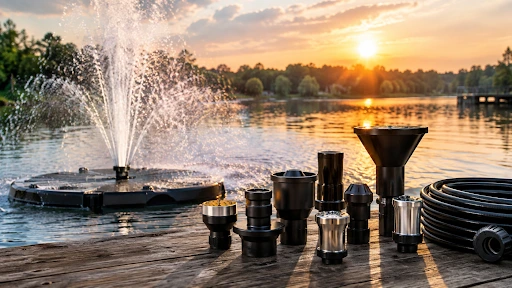
Floating fountain nozzles are available in two main options, including the 1.5-inch threaded brass nozzle made from brass and interchangeable spray nozzle heads made from UV-resistant engineered plastic. Each option serves a different purpose; below are the available spray patterns:
- Brass Fountain Nozzle: Built for durability, this 1.5-inch threaded brass nozzle provides a secure connection for compatible fountain systems. Its sturdy construction makes it a practical option for maintaining reliable performance during continuous outdoor fountain operation.
- Geyser: Producing a concentrated vertical column of water, the Geyser pattern emphasizes height rather than wide coverage. This makes it suitable when a prominent upward display is desired without directing water extensively across the pond.
- Trumpet: A broader plume distinguishes the Trumpet pattern, with water gradually opening outward from a defined center. Its fuller shape provides noticeable coverage while giving the fountain a structured and decorative appearance.
- Tulip: With its rounded and symmetrical formation, the Tulip pattern creates a softer-looking water display. Water rises from the center before spreading outward, making it suitable for installations where balanced visual coverage is preferred.
- Classic V: Water moves outward in two defined directions with the Classic V pattern, creating greater horizontal reach. Its directional formation can help extend the fountain display across the pond while maintaining a clearly defined spray shape.
- Wide V: Designed for greater outward coverage, the Wide V pattern sends water farther across the pond surface than a narrower V. Its wider reach makes pond size an important consideration when selecting this nozzle.
| Refresh your floating fountain’s spray and restore its intended display with a replacement nozzle suited to your setup. |
Essential Steps for Choosing a Floating Fountain Nozzle
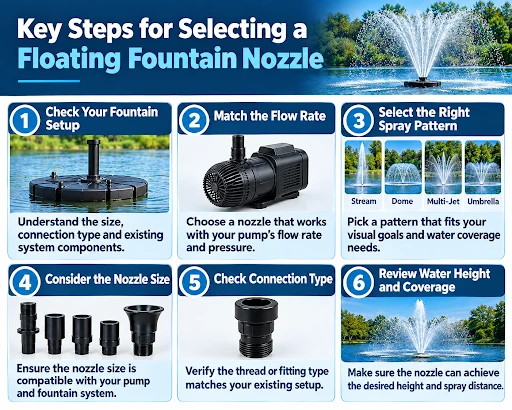
Selecting the right floating fountain nozzle starts with understanding the existing fountain system and the result you want to achieve. Check the pump’s flow rate, nozzle connection, spray height, and coverage before making a replacement. Consider the pond’s size and surrounding conditions, including wind exposure, to ensure the spray remains balanced and controlled. It is also important to compare the replacement with the original nozzle’s specifications rather than relying on appearance alone. These checks can help you choose a compatible nozzle and maintain consistent fountain performance.
Factors to Consider When Selecting a Compatible Replacement Nozzle
A replacement nozzle needs to work with the fountain already in place, not simply look similar to the original. Key checks can help determine whether a nozzle is genuinely compatible with the existing floating fountain.
Check the Pump’s Flow and Pressure
The pump’s GPH and horsepower indicate available water flow. Before choosing a replacement, compare these figures with nozzle requirements to avoid weak sprays, excessive backpressure, or performance that falls short of desired results. The U.S. Environmental Protection Agency (EPA) WaterSense guidance notes that ornamental water features can reduce water consumption through appropriate pump sizing and lower pumping rates, making flow an important consideration when evaluating fountain performance.
Compare the Expected Spray Dimensions
Check the nozzle’s expected spray height and width against what the fountain currently produces. This helps maintain a familiar visual scale and prevents selecting a replacement that appears too small or oversized for the setting.
Match the Nozzle to Pond Proportions
Pond size should guide the selection because spray coverage needs to suit the available water area. For floating pond fountains, a proportionate display looks balanced and reduces the chance of water reaching unwanted edges or surrounding areas near shorelines.
Account for Wind and Water Conditions
Wind conditions matter when choosing a replacement because lighter sprays can drift more easily. In an exposed location, a steadier water formation can help keep the display where expected and reduce unwanted splash outside the pond. Environmental conditions can also influence water loss because, as the U.S. Geological Survey explains, evaporation moves water from exposed surfaces into the atmosphere.
Common Mistakes to Avoid When Replacing a Floating Fountain Nozzle
Even after identifying a suitable replacement, small oversights can affect the result. Avoiding these common mistakes can make the replacement process easier and help preserve the fountain’s intended operation.
Choosing Based Only on Appearance
A nozzle may look similar to the original while having different specifications or water-flow characteristics. Selecting it simply because its shape appears right can lead to unexpected performance. Check the product details rather than relying on visual similarity alone.
Ignoring the Existing Fountain’s Specifications
Replacing one component without checking the fountain’s original specifications can create compatibility problems. Keep the fountain model, pump information, and existing nozzle details available when comparing replacements. These references make it easier to identify an option designed for the existing setup. For additional information about fountain systems, refer to this complete guide to floating pond fountains to better understand their components and operation.
Replacing a Nozzle Without Inspecting It
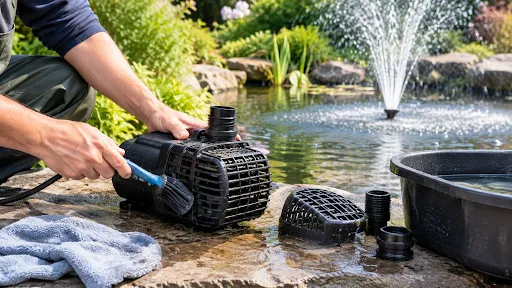
A nozzle that appears to be performing poorly may not necessarily need replacement. Debris, mineral buildup, or a partially blocked opening can interfere with water flow. Inspect and clean the existing component first to determine whether the problem is damage or simply obstruction.
Conclusion
A well-matched replacement nozzle can help restore the intended appearance and performance of a floating fountain without unnecessary changes to the system. Checking pump capacity, spray dimensions, pond size, and environmental conditions makes the selection more reliable. Friendly Fountains provides a range of fountain nozzle options to help find the right fit for different floating fountain applications and display requirements.
| Need the right replacement nozzle for your floating fountain? Friendly Fountains offers nozzle options for dependable spray performance and easy replacement. |
FAQs About Replacing a Floating Fountain Nozzle
How often should I replace a floating fountain nozzle?
There is no fixed replacement schedule. Replace the nozzle when it becomes damaged, permanently clogged, worn, or unable to produce its intended spray properly.
Can I replace just the nozzle without replacing the fountain pump?
Yes, in many cases. If the existing pump remains functional and the replacement nozzle is compatible with the system, only the nozzle may need replacing.
How do I know if my fountain nozzle is damaged?
Visible cracks, broken openings, deformation, persistent leaks, or an irregular spray after thorough cleaning can indicate that the nozzle needs replacement.
Can mineral deposits permanently affect a fountain nozzle?
Heavy mineral buildup can restrict water openings and alter spray performance. Cleaning may restore function, but severely affected or damaged nozzles may require replacement.
Is a replacement nozzle worth buying instead of replacing the whole fountain?
If the pump and other fountain components remain functional, replacing only the nozzle can restore or change the spray without the expense of replacing the complete floating fountain.