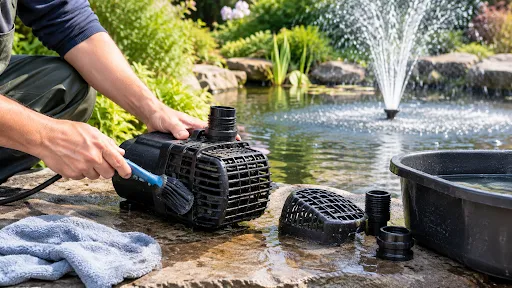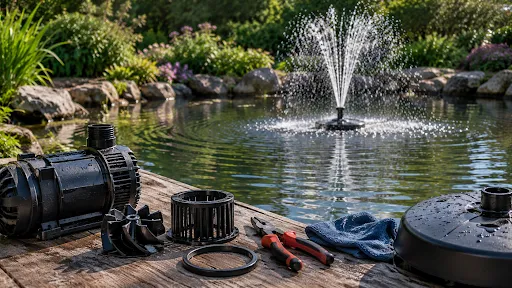
Floating fountains are aesthetically pleasing, but pond fountain parts are not immune to wear over time. With continued use and outdoor exposure, fountain components may eventually need pond pump repair or replacement, depending on the condition and extent of the issue. Similarly, other components may require maintenance or replacement to maintain proper water flow and keep the fountain functioning as intended. Knowing when a repair is enough and when replacement is the more practical choice can help avoid unnecessary costs. However, you may be confused about when to repair a component and when to replace it.
This guide explains when each option makes the most sense.
Understanding: Maintenance of Pond Fountain PartsTimely pond pump repair and routine water feature maintenance can restore proper water flow, prevent water loss, and extend equipment life. Repair minor issues such as loose tubing, worn seals, or clogged impellers, but replace components with severe damage, electrical faults, or costly recurring failures to keep your fountain operating safely and efficiently. |
When Pond Fountain Parts Need Repair
Loose Tubing Causing Misaligned Water Flow
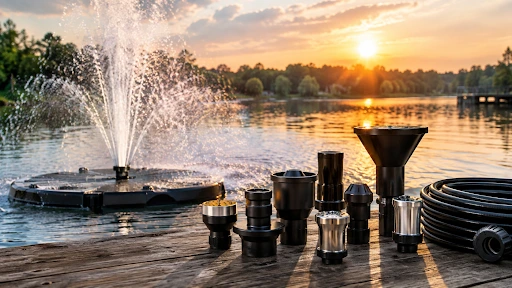
Tubing can loosen, split, or shift during regular outdoor operation, causing water to spray unevenly or collect away from the intended outlet. For fountains using different tubing configurations, reviewing the available fountain parts and accessories can help identify the appropriate component for the existing setup. These problems can also contribute to unnecessary water loss.
Reduced Water Flow From a Worn Impeller
A weak or inconsistent water stream can indicate a worn, obstructed, or damaged impeller inside the pump. Since the impeller drives water movement, deterioration can reduce circulation and put additional strain on the motor. Water feature pump repair may be suitable when the pump is still electrically functional, but its internal components are no longer delivering consistent water flow.
Leaking Seals Around Fountain Connections
Persistent water loss around fittings, pump connections, or component joints can indicate deteriorated O-rings or gaskets. These seals maintain watertight connections, so cracking, compression loss, or age can affect fountain performance. Miami-Dade County’s fountain maintenance specifications recommend inspecting pump motors and related fountain components and replacing parts when necessary. Regular inspection helps identify leakage early and determine whether a damaged seal needs repair or replacement.
Surface Cracks Affecting the Fountain Bowl
Small cracks in concrete, stone, resin, or fiberglass fountain bowls can compromise water retention and allow moisture to penetrate the underlying material. Effective pond repair depends on identifying the crack’s depth, location, and impact on structural integrity. Superficial cracks may be treated with a material-compatible sealant, while deeper fractures may require specialized restoration to prevent further deterioration and maintain the bowl’s watertight performance.
| Keep your fountain operating efficiently with the right components. We offer fountain parts and accessories to help maintain water flow and address common fountain issues. |
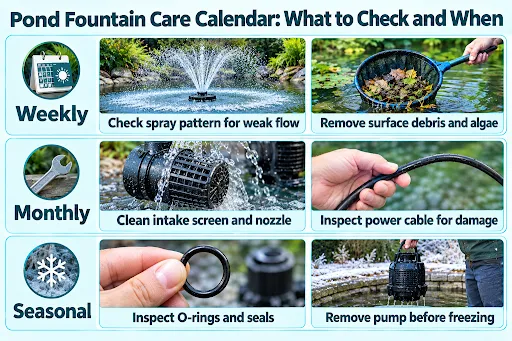
Pond Fountain Maintenance Schedule
Most repair issues start as small problems that go unnoticed for weeks. Therefore, a simple maintenance routine helps you catch them before they affect the pump, seals, or spray pattern. The schedule below breaks upkeep into weekly, monthly, and seasonal tasks, so have a look at it:
Signs That Indicate a Fountain Part Should Be Replaced
Burnt-Out Pump Motor
- Part: The motor uses coiled copper wire to spin the shaft that powers the impeller. But overheating damages the wire’s coating, so the motor can no longer spin properly.
- Replace when: The pump hums without any spinning, smells burnt, or repeatedly trips the breaker even after the impeller is cleaned. At this stage, pond pump repair cannot restore the damaged windings.
Cracked Pump Housing
- Part: The housing encloses the motor and impeller, keeping water away from electrical components while directing flow through the pump’s internal chamber.
- Replace when: Water seeps from the casing body itself, or visible hairline cracks appear, rather than leaking at fittings or joints.
Damaged Power Cable
- Part: The submersible cable of the fountains supplies electricity underwater, and its insulation protects against short circuits, shocks, and water entering the motor.
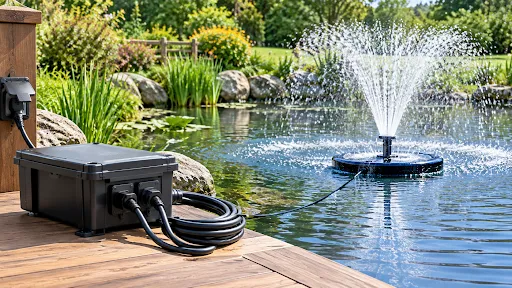
- Replace when: The insulation is cut, brittle, or exposed, or the GFCI trips repeatedly. Remember that the cable damage near the pump is unsafe to patch, so no water feature repair should involve taping it.
Seized Pump Shaft or Worn Bearings
- Part: The shaft and bearings let the impeller spin smoothly. Constant friction, grit, and corrosion gradually wear these precision components down, and far beyond what routine pond repairs and maintenance can reverse.
- Replace when: The impeller will not turn freely by hand, or a persistent grinding sound continues even after thorough cleaning.
Waterlogged or Cracked Float
- Part: The float keeps your floating pond fountain buoyant and level, allowing the pump to sit at the correct depth below the surface.
- Replace when: You notice that the unit sits low, absorbs water, or tilts permanently. This happens because the float has cracked or lost its buoyancy.
Eroded Spray Nozzle
- Part: The nozzle shapes the water pattern in the fountain. However, due to years of pressure, sediment, and sun exposure, it can widen its opening and distort the spray.
- Replace when: The spray stays uneven or weak even after cleaning, because the nozzle opening itself is worn, warped, or cracked. Understanding floating pond fountains helps you confirm whether the spray pattern has genuinely changed.
Conclusion
Always keep in mind that repairing minor wear keeps costs low, while replacing failed components protects the rest of your fountain from further damage. So, if you are also searching for professional help, check out Friendly Fountains. Our years of experience supplying floating pond fountains, replacement pumps, and other fountain parts have helped pond fountain owners keep their water features running smoothly.
| Protect your fountain’s performance with quality replacement parts and reliable guidance. Our team at Friendly Fountains can help you find suitable components for your needs. |
FAQs- About Repair and Replacement of Pond Fountain Parts
What is the cost limit at which pond pump repair stops making sense?
When repair costs reach roughly half the price of a comparable new pump, replacement gives better efficiency, reliability, and warranty coverage.
Does winter freezing damage pond fountain pumps?
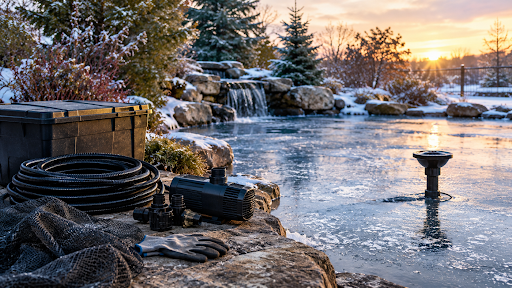
Yes. Ice expands inside housings and fittings and cracks them. Always remove the pump before sustained freezing and store it submerged in water, indoors.
How do pump curves help select a replacement fountain pump?
Pump curves show the relationship between flow rate and total dynamic head. Comparing the system’s required operating point with the curve helps verify suitable pump performance.
Can hard water affect pond fountain performance?
Yes. Dissolved minerals can accumulate on nozzles, intake screens, and other surfaces, restricting water flow. Hence, routine cleaning helps reduce the need for pond pump repair later.
Does running a pond fountain continuously wear out the pump faster?
Continuous operation contributes to normal component wear, but a properly sized pump maintained under suitable conditions can operate continuously if its manufacturer permits it.