Fountains have long been loved for how they elevate any pond’s look, but did you know that they are equally functional? Well, floating pond fountains sit on the water’s surface and use pumps to circulate and spray water into the air. This helps improve oxygen levels and prevent stagnation.
Many people just get a pond built and ignore installing this highly functional feature. This often leads to algae growth and other water quality issues over time. Hence, understanding how these fountains work can help you make smarter choices. In this guide, we’ll break down what floating pond fountains actually do, how they operate, and what to look for when picking the right one, without overcomplicating it.
Key Takeaways
|
What a Floating Pond Fountain Is and How It Operates?
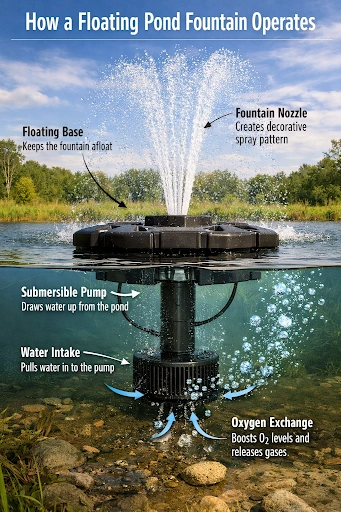
A floating pond fountain is a self-contained water feature that rests on the surface of a pond and uses a submersible pump to draw water upward and spray it into the air. The water is then dispersed in decorative patterns before falling back, creating continuous circulation. This process plays a crucial role in aeration, as it increases the amount of dissolved oxygen in the water.
How Floating Pond Fountains Improve Pond Water Quality?
Boost dissolved oxygen levels
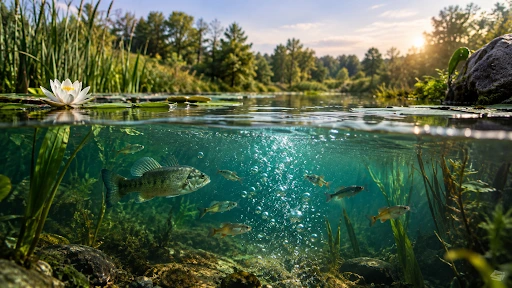
When water is sprayed into the air, it increases surface contact with oxygen. This allows more oxygen to dissolve back into the pond, which is essential for fish respiration and for beneficial bacteria that break down organic waste.
Prevent water stagnation
Stagnant water creates low-oxygen zones where harmful bacteria thrive. Continuous movement from the fountain keeps the entire pond active, reducing dead zones and maintaining a healthier environment.
Control algae growth
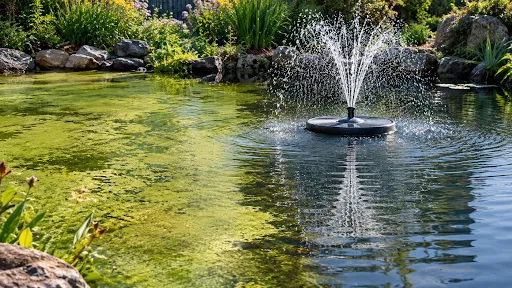
Algae tends to grow rapidly in still, nutrient-rich water exposed to sunlight. By circulating water and disturbing the surface, fountains make it harder for algae to establish and spread.
Improve water clarity
Circulation helps suspend and move debris toward filtration systems or natural breakdown processes, preventing particles from settling and clouding the water.
Support beneficial bacteria activity
Aerobic bacteria need oxygen to decompose organic matter like fish waste and fallen leaves. Higher oxygen levels speed up this process, reducing sludge buildup.
Evenly distribute nutrients and temperature
Without movement, ponds can develop layers (stratification). Fountains mix the water, ensuring consistent temperature and nutrient distribution throughout.
Reduce buildup of harmful gases
Decomposition in low-oxygen conditions releases gases like ammonia and hydrogen sulfide. Water movement allows these gases to escape, preventing toxic buildup.
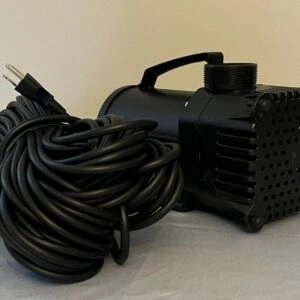
Pond Fountain Pumps: Horsepower Ratings, Flow Rates, and What They Mean for Your Water Feature
How Pond Fountain Pump Power Is Measured: HP and GPH Explained
Pond pump performance is defined by horsepower (HP) and flow rate (GPH—gallons per hour).
- HP reflects the motor’s strength and its ability to push water upward against gravity (known as head height), which directly affects how high and forcefully the fountain sprays.
- GPH measures the volume of water the pump can circulate in an hour, influencing how well the pond is aerated and how widely the spray is distributed.
Higher HP usually supports higher GPH, but efficiency also depends on pump design and nozzle type. Balancing both ensures optimal water movement, energy use, and overall fountain performance.
1/3 HP Pond Pumps: Specifications, Flow Rate, and Ideal Pond Size
Typically delivering 4,000–6,000 GPH, 1/3 HP pumps are ideal for small ponds (up to ~¼ acre). They provide adequate circulation and light aeration without excessive energy use.
1/2 HP Pond Pumps: Specifications, Flow Rate, and Ideal Pond Size
With flow rates around 6,000–9,000 GPH, these pumps suit medium-sized ponds (¼–½ acre), offering stronger spray patterns and improved oxygen distribution.
3/4 HP Pond Pumps: Specifications, Flow Rate, and Ideal Pond Size
Producing 9,000–12,000+ GPH, 3/4 HP pumps are designed for larger ponds (up to ~1 acre), ensuring powerful circulation and effective aeration.
What Voltage and Electrical Setup Does a Pond Pump Require?
Pond pumps typically operate on 120V or 230V electrical systems, with the choice depending on the pump’s horsepower and overall power demand.
- Smaller pumps (like 1/3 HP) usually run on standard 120V household circuits, making them easier to install.
- Larger pumps (1/2 HP and above) often require 230V power, which is more efficient for handling higher loads and reduces the risk of overheating or voltage drop over longer cable distances.
For safety, pond pumps should always be connected to a GFCI (Ground Fault Circuit Interrupter) outlet to prevent electrical shock, especially in wet environments. Many setups also benefit from a dedicated circuit, ensuring the pump receives consistent power without overloading other electrical devices. Proper waterproof connections, outdoor-rated wiring, and correct grounding are essential to ensure safe, reliable, and long-term operation.
How to Match Pump GPH Output to Your Pond’s Surface Area?
To choose the right GPH, base it on your pond’s surface area rather than total volume. A common rule is at least 100–150 GPH per linear foot of pond width for basic circulation. For fountains, aim for 4,000–5,000 GPH per ¼ acre to ensure proper surface agitation and aeration. Larger ponds need proportionally higher flow to avoid dead zones. Also factor in depth, wind exposure, and fish load; heavier loads or deeper ponds require more GPH. Always check pump performance at your required spray height, as flow rate decreases with elevation.
Pump Maintenance: Debris Bags, Intake Cleaning, and Run Schedules
- Use debris bags or pre-filters to catch leaves and sediment before they enter the pump, reducing clogging.
- Clean intake screens every 2–4 weeks, or more often in debris-heavy ponds.
- Run pumps continuously for best aeration, but inspect regularly to ensure consistent flow and prevent motor strain.
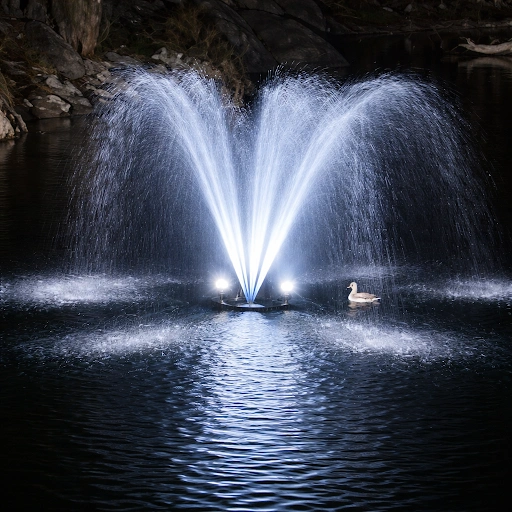
Pond Fountain Lights: LED Options, Installation, and How Lighting Affects Nighttime Pond Aesthetics
How Pond Fountain Lighting Systems Work: Voltage, Wattage, and Placement
Voltage
Most pond fountain lighting systems use low-voltage (12V) transformers to safely power underwater LEDs, reducing electrical risk in wet environments.
Wattage
Wattage typically ranges from 3–6 watts per LED fixture, providing enough brightness without overpowering the water feature.
Lighting
Lights are usually placed 6–12 inches below the surface and 12–18 inches from the fountain nozzle, angled upward so beams intersect within the spray for even illumination and minimal dark spots.
White vs Color-Changing LED Fountain Lights: What Each Produces
| Feature | White LED Lights | Color-Changing (RGB) LED Lights |
| Lighting Effect | Clean, natural illumination | Dynamic, customizable colors |
| Best Use Case | Elegant, subtle landscapes | Events, mood lighting, visual impact |
| Color Temperature | Warm (3000K) or cool (5000K) tones | Multiple colors with programmable settings |
| Control Options | Usually fixed output | Remote/app-controlled color changes |
| Visual Impact | Highlights water clarity and detail | Creates dramatic, eye-catching displays |
How to Add a Light Kit to an Existing Floating Fountain?
Adding a light kit involves attaching submersible LED fixtures around the fountain float or nozzle assembly, usually in a circular arrangement for even coverage. Most kits plug into a low-voltage transformer system, making installation relatively simple. Cables are routed along the float and secured underwater, then connected to a weatherproof power source. Many modern kits are plug-and-play, allowing upgrades without replacing the entire fountain system.
Underwater LED Light Placement for Maximum Visual Effect
Strategic placement is key; lights should be positioned to shine through moving water rather than directly at it. Angling lights upward or across the spray enhances depth and reduces glare.
Placing lights behind waterfalls or beneath jets highlights motion, while side angles create shadows and dimension. Avoid direct line-of-sight placement to prevent harsh reflections and instead focus on illuminating from viewer-facing angles.
Electrical Safety Considerations for Outdoor Pond Lighting
- Use low-voltage (12V) systems to minimize electrical hazards in water
- Install a GFCI-protected outlet to prevent shock risks
- Use waterproof connectors and sealed cables to prevent short circuits
- Keep transformers elevated above ground level to avoid water damage
- Route cables through protective conduit where exposed
How Weather and Water Affect LED Pond Light Longevity?
LED pond lights are built for durability, but exposure to temperature changes, moisture, and mineral buildup can impact performance over time. High-quality, IP68-rated fixtures resist corrosion and water ingress, while proper sealing and periodic cleaning help maintain brightness and extend lifespan.
Fountain Lighting and Pond Wildlife: What to Know
Pond lighting can attract insects, which in turn draw fish, frogs, and birds, increasing nighttime activity. However, excessive brightness or constant lighting may disrupt natural behaviors, so it’s best to use moderate intensity and timed lighting schedules to balance aesthetics with ecosystem health.
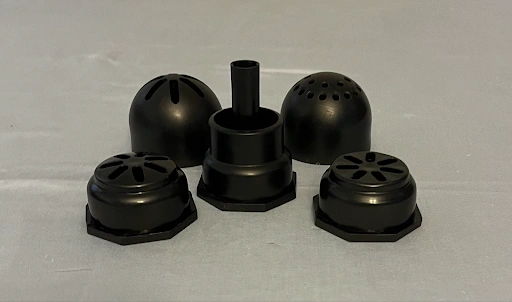
Pond Fountain Nozzle Patterns: Types, Spray Heights, and How to Choose the Right Pattern for Your Pond
What a Pond Fountain Nozzle Does and How It Controls Spray Pattern?
A pond fountain nozzle is the component that shapes and directs water flow, turning raw pump output into a specific spray pattern. It controls velocity, direction, and dispersion by regulating how water exits through its orifice. Different nozzle designs create distinct effects, such as vertical jets, wide fans, or foamy plumes, by altering pressure and airflow. The final spray height and width depend on the balance between pump GPH, pressure, and nozzle size. A mismatch can reduce performance, causing weak or unstable patterns.
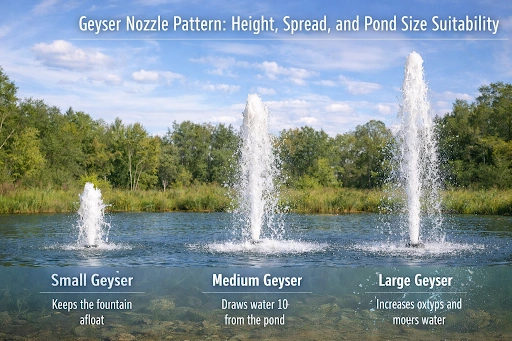
Geyser Nozzle Pattern: Height, Spread, and Pond Size Suitability
| Specification | Small Geyser | Medium Geyser | Large Geyser |
| Spray Height | 2–6 ft | 6–12 ft | 12–30+ ft |
| Spray Type | Foamy, vertical cone | Dense white column | High, powerful jet |
| Flow Rate (GPM) | 5–10 | 10–25 | 25–50+ |
| Wind Resistance | High | Very high | Very high |
| Splash Radius | Low–moderate | Moderate | Moderate |
| Best Pond Size | Small ponds | Medium ponds | Large ponds |
Tulip Nozzle Pattern: Shape, Wind Sensitivity, and Visual Effect
| Specification | Small Tulip | Medium Tulip | Large Tulip |
| Spray Shape | Bell/umbrella | Full tulip bloom | Wide layered sheet |
| Spray Height | 2–4 ft | 4–8 ft | 8–12 ft |
| Spread Width | Moderate | Wide | Very wide |
| Wind Sensitivity | High | Very high | Extremely high |
| Water Effect | Smooth sheet | Decorative bloom | Elegant cascade |
| Best Use | Decorative ponds | Formal gardens | Sheltered ponds |
| Key Feature | Soft, aesthetic flow | Symmetrical shape | Visual elegance |
Wide Plume Nozzle: Coverage Area and Aeration Benefit
| Specification | Small Wide Plume | Medium Wide Plume | Large Wide Plume |
| Spray Height | 3–5 ft | 4–6 ft | 5–8 ft |
| Spread Width | 10–16 ft | 16–20 ft | 20–25+ ft |
| Flow Rate | Moderate | High | Very high |
| Aeration Level | High | Very high | Maximum |
| Wind Resistance | Moderate | Moderate | Moderate |
| Best Pond Size | Medium ponds | Medium–large ponds | Large ponds |
| Key Feature | Broad coverage | Surface agitation | Maximum oxygenation |
Gusher Nozzle: Flow Characteristics and Best Use Cases
| Specification | 1/2 HP Setup | 3/4 HP Setup | 1 HP+ Setup |
| Spray Height | ~15 ft | ~20 ft | 20–50 ft |
| Spray Width | ~6 ft | ~6 ft | 6–7 ft |
| Flow Rate (GPH) | ~3,000 | ~3,600–4,200 | 5,000–10,000+ |
| Pattern Type | Straight vertical jet | Strong column | High-impact jet |
| Aeration Level | Moderate | High | Very high |
| Best Pond Size | Up to ½ acre | Up to ¾ acre | 1+ acre |
| Key Feature | Tall, narrow stream | Strong visual height | Maximum vertical impact |
How Thread Size Affects Nozzle Compatibility With Your Pump?
- Nozzles connect via standard threaded inlets (e.g., 1″, 1.5″, 2″), which must match the pump outlet
- Larger thread sizes allow higher flow rates, supporting bigger spray patterns
- Mismatched threads can cause leaks, reduced pressure, or installation failure
- Adapters can be used, but may reduce efficiency or restrict flow
- Always check manufacturer specs for both pump discharge size and nozzle inlet type (FNPT/BSP)
- Incorrect sizing can limit spray height even if the pump power is sufficient.
When and How to Swap a Fountain Nozzle Mid-Season?
When to Swap a Fountain Nozzle Mid-Season?
- Uneven or distorted spray pattern – often caused by clogging, wear, or mineral buildup affecting water flow
- Seasonal changes (wind or weather) – switching to a more wind-resistant pattern improves performance
- Water quality issues – changing to a wider or more aerating nozzle can help improve oxygen levels
- Desire for a different visual effect – upgrading patterns for events or aesthetic changes
- Reduced pump performance – a mismatched or damaged nozzle can restrict flow and lower efficiency
How to Swap a Fountain Nozzle Mid-Season?
- Start by turning off the power supply and unplugging the unit to ensure safety.
- If the fountain is easily accessible, lift or tilt it to reach the nozzle assembly.
- Unscrew the existing nozzle; most are threaded for tool-free removal.
- Before installing the new one, check that the thread size and flow requirements match your pump.
- Securely attach the new nozzle, ensuring a tight fit to prevent leaks or pressure loss.
- Once reinstalled, place the fountain back in position, restore power, and test the spray pattern.
- Make minor adjustments to alignment or flow control for the best results.
Pond Maintenance: How to Keep Pond Water Clear, Control Algae, and Manage Muck and Sediment
Why Pond Water Becomes Green, Brown, or Murky?
- Excess nutrients (nitrogen & phosphorus) from runoff, fish waste, and decaying organic matter fuel algae blooms
- Algae overgrowth (especially phytoplankton) turns water green by rapidly multiplying in sunlight
- Suspended sediment from soil erosion, rain, or bottom disturbance causes brown, muddy water
- Decomposing leaves and debris release tannins, giving water a tea-brown color
- Low oxygen levels slow down natural decomposition, leading to the buildup of organic waste
How Pond Algae Forms and What Conditions Accelerate Its Growth?
How does Pond Algae Form?
Pond algae form when microscopic algae (phytoplankton) multiply rapidly in water rich in nutrients and sunlight, using photosynthesis to grow and spread across the pond.
What Conditions Accelerate Its Growth?
- High nutrient levels (nitrogen and phosphorus from runoff, waste)
- Strong sunlight exposure (especially in shallow ponds)
- Warm water temperatures (around 20–30°C)
- Stagnant or low-circulation water
What Pond Dye Does and How It Controls Algae Photosynthesis?
Pond dye works by absorbing specific wavelengths of sunlight, particularly red and blue light that algae need for photosynthesis. By limiting light penetration into deeper water layers, it reduces the energy available for algae growth without harming fish or plants when used correctly. Most dyes are formulated with environmentally safe colorants that disperse evenly and remain stable in sunlight. This creates a shaded effect, slowing algae reproduction while also enhancing water’s appearance with a reflective blue or black tint.
Muck and Sediment: How It Builds Up and Why It Affects Water Quality
Muck forms from the accumulation of organic matter like leaves, fish waste, uneaten food, and dead algae that settle at the pond bottom. In low-oxygen conditions, decomposition slows, creating these thick sludge layers that release harmful gases like ammonia and hydrogen sulfide, degrading water quality and clarity.
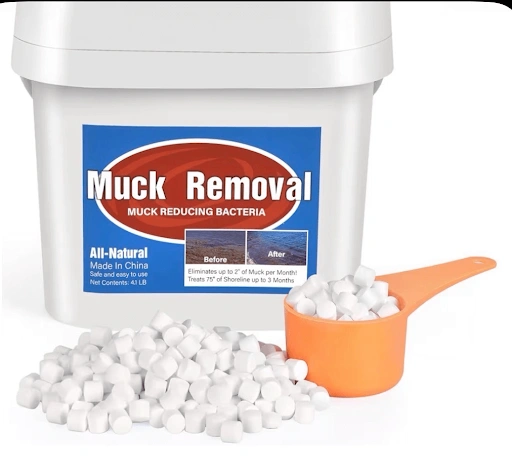
How Muck Removal Pellets and Beneficial Bacteria Work?
Muck removal pellets contain aerobic bacteria and enzymes that digest organic sludge. These microbes break down complex waste into simpler compounds like carbon dioxide and water, reducing sediment buildup. Their effectiveness depends on adequate oxygen levels and warm temperatures, which accelerate bacterial activity and decomposition rates.
The Role of a Fountain in Pond Oxygenation and Circulation
A fountain increases oxygen levels by aerating water through surface agitation and spray, promoting gas exchange. It also circulates water vertically and horizontally, preventing stagnation, distributing oxygen evenly, and supporting beneficial bacteria that naturally break down organic waste.
A Seasonal Pond Maintenance Schedule: Spring Through Winter
Spring: Remove debris, restart equipment, add beneficial bacteria, inspect pump and fountain
Summer: Monitor algae growth, maintain aeration, clean filters, and manage water levels
Fall: Remove falling leaves, reduce feeding (if fish present), prepare equipment for colder weather
Winter: Run aeration if needed to prevent ice cover, or safely shut down and store equipment depending on the climate
How to Size a Pond Fountain: Surface Area, Pump Horsepower, and the Calculations That Determine the Right Fit
Why Fountain Sizing Matters for Water Quality and Aeration?
Proper fountain sizing ensures sufficient water movement and oxygen transfer across the pond’s surface. An appropriately sized unit prevents stagnation, supports beneficial bacteria, and maintains balanced oxygen levels. Incorrect sizing reduces aeration efficiency, leading to algae growth, poor water clarity, and unhealthy aquatic conditions.
How to Measure Your Pond Surface Area: Shapes, Formulas, and Tools
Measuring pond surface area is essential for accurate fountain sizing.
- For rectangular ponds: Multiply length × width.
- For circular ponds: Use π × radius².
- Irregular ponds can be estimated by dividing the shape into smaller sections (rectangles or circles) and adding their areas together.
Surface area is typically calculated in square feet or acres (1 acre = 43,560 sq ft). Tools like measuring tapes or laser distance meters can improve accuracy. Focus on surface area, not volume, since aeration mainly occurs at the water’s surface, where oxygen exchange happens.
The Relationship Between Pond Size, HP, and GPH Output
Pond size determines how much water movement is needed, which directly influences required horsepower (HP) and flow rate (GPH).
Larger ponds need higher HP pumps to generate sufficient GPH for effective circulation and aeration. For example, a 1/2 HP pump typically produces enough flow for medium ponds, while larger ponds require 3/4 HP or more to maintain consistent oxygen distribution and surface agitation.
How do Water Depth and Shoreline Shape Affect Sizing Decisions?
- Deeper ponds require stronger circulation to move oxygen to lower layers
- Irregular shorelines create dead zones that need higher flow or multiple fountains
- Steep drop-offs reduce natural mixing, increasing aeration demand
- Shallow ponds heat faster, increasing oxygen demand and algae risk
- Long, narrow ponds need directional flow rather than centralized spraying
What Happens When a Fountain Is Undersized or Oversized for a Pond
An undersized fountain fails to circulate water effectively, leading to stagnant zones, low oxygen levels, and increased algae growth.
An oversized fountain can cause excessive turbulence, energy waste, and unnecessary operational costs without significantly improving water quality beyond optimal levels.
Sizing for Aesthetics vs Sizing for Aeration: Different Goals, Different Calculations
Sizing for aesthetics focuses on visual impact, such as spray height and pattern visibility, often requiring less precise calculations.
Aeration-focused sizing prioritizes oxygen transfer and circulation, requiring accurate matching of HP and GPH to pond surface area. A fountain may look impressive but still underperform in aeration if undersized.
For best results, balance both by selecting a unit that meets minimum aeration requirements while delivering the desired visual effect.
A Reference Table: Pond Surface Area to Recommended Fountain Horsepower
| Pond Surface Area | Recommended HP | Typical GPH Range | Application |
| Up to ¼ acre | 1/3 HP | 4,000–6,000 GPH | Small ponds, light aeration |
| ¼ – ½ acre | 1/2 HP | 6,000–9,000 GPH | متوسط ponds, balanced aeration |
| ½ – 1 acre | 3/4 HP | 9,000–12,000+ GPH | Larger ponds, strong circulation |
| 1 – 2 acres | 1 HP | 12,000–20,000 GPH | High aeration demand |
| 2+ acres | 1.5 HP+ | 20,000+ GPH | Large ponds/lakes, heavy-duty use |
Pond Fountain Installation: How the Setup Process Works, What Is Required, and What Affects Placement
What a Floating Pond Fountain Installation Involves: An Overview
Installing a floating pond fountain involves assembling the unit, attaching the pump and nozzle, connecting power cables, and placing the fountain in the pond. The system is then anchored to maintain position and connected to a power source. Final adjustments ensure proper spray pattern, stability, and consistent operation.
Electrical Requirements: Outlet Type, GFCI, and Cord Length
- Use a GFCI-protected outlet to prevent electrical shock in wet environments
- Most fountains require 120V or 230V power, depending on motor size
- Ensure outdoor-rated, waterproof connections for all wiring
- Cord length must safely reach the power source without tension or splicing
- Use heavy-duty extension cords only if rated for outdoor and submersible use
- Install dedicated circuits for higher HP units to prevent overload
How to Position a Fountain for Optimal Spray and Minimal Drift?
Position the fountain near the center of the pond to ensure even water distribution and balanced aeration. Keep it away from shorelines, trees, or structures to prevent spray drift and water loss. Wind direction should also be considered, placing the fountain slightly upwind helps reduce overspray onto banks and surrounding areas.
Mooring and Anchoring Systems: Rope Length and Tie-Off Points
Floating fountains are secured using anchoring lines attached to weights or shoreline tie-off points.
- Rope length should be about 1.5 to 2 times the water depth to allow natural movement without drifting.
- Anchors are typically placed in a triangular or multi-point setup to keep the fountain stable and centered, even in wind or currents.
What does an On-Site Pond Analysis Evaluates Before Installation?
A site analysis assesses pond size, depth, water quality, and electrical access. It also evaluates wind exposure, shoreline layout, and potential obstacles to determine the best fountain size, placement, and anchoring method for optimal performance and longevity.
Access, Shoreline Conditions, and Physical Constraints That Affect Setup
- Limited shoreline access can make installation and maintenance more difficult
- Steep or muddy banks may require additional safety measures
- Rocky or uneven bottoms affect anchor placement
- Nearby trees or structures can interfere with spray patterns
- Distance from power source impacts cable requirements
- Fluctuating water levels may require adjustable anchoring
DIY Installation vs Professional Installation: What Each Involves
DIY installation involves assembling the unit, setting anchors, and connecting power, which works well for smaller systems. However, professional installation ensures correct electrical setup, precise positioning, and secure anchoring, especially for larger fountains. Professionals also conduct site analysis and handle safety compliance, reducing risks and ensuring long-term performance.
Pond Water Quality: How Aeration, Circulation, and Organic Buildup Affect a Healthy Pond Ecosystem
What Pond Water Quality Means and Why It Changes Over Time?
Pond water quality is the physical, chemical, and biological condition of water that determines ecosystem health and stability. It changes over time due to:
- Seasonal temperature changes alter oxygen levels and biological activity
- Runoff introduces nutrients, sediments, and pollutants
- Decomposition of organic matter increases waste buildup
- Fish waste and overfeeding raise ammonia and nutrient levels
- Lack of circulation leads to stratification and stagnation
- Algae blooms consume oxygen and disrupt the balance
How Dissolved Oxygen Levels Affect Fish, Plants, and Beneficial Bacteria?
- Fish: Require dissolved oxygen for respiration; low levels cause stress or death
- Aquatic plants: Use oxygen at night and release it during photosynthesis. Low oxygen levels can cause death
- Beneficial bacteria: Depend on oxygen to break down organic waste efficiently, low oxygen levels hamper this process, disturbing the ecosystem of a pond.
Why Stagnant Water Surfaces Develop Algae, Odour, and Mosquitoes?
Stagnant water lacks circulation, allowing nutrients and organic waste to accumulate at the surface. This creates ideal conditions for algae growth, which blocks light and depletes oxygen. Thus, decomposing matter produces foul odors, while still water provides breeding grounds for mosquitoes, especially in warm conditions where larvae develop rapidly without disturbance.
How Aeration and Circulation Physically Improve Water Quality?
Aeration increases oxygen exchange at the water surface, while circulation distributes oxygen evenly throughout the pond. This prevents stratification, supports aerobic bacteria, and speeds up decomposition of organic waste. Continuous movement reduces sludge buildup, discourages algae formation, and keeps water clearer, healthier, and more stable over time.
Nutrient Overload: Runoff, Organic Matter, and Eutrophication in Ponds
Nutrient overload occurs when excess nitrogen and phosphorus enter ponds through fertilizer runoff, decaying leaves, fish waste, and soil erosion. These nutrients trigger rapid algae growth, leading to eutrophication, a process where oxygen levels drop as algae die and decompose. This deoxygenation harms fish, disrupts bacterial balance, and accelerates sludge accumulation. Over time, the pond becomes biologically imbalanced, with frequent algae blooms, poor clarity, and reduced ecosystem stability unless managed through aeration and nutrient control.
How a Fountain Contributes to a Balanced Pond Ecosystem?
A fountain maintains balance by continuously aerating and circulating water. It increases dissolved oxygen levels, supports beneficial bacteria, and prevents stagnation. This reduces algae growth, improves clarity, and helps break down organic waste, creating a healthier and more stable aquatic ecosystem overall.
Signs That a Pond Has Poor Water Quality and What Each Indicates
- Green or pea-colored water: Excess algae growth due to high nutrients
- Foul odor: Decomposition in low-oxygen conditions producing gases
- Murky or brown water: Suspended sediment or organic sludge buildup
- Fish gasping at surface: Low dissolved oxygen levels
- Excessive surface foam: High organic pollution or detergent contamination
- Sludge accumulation at bottom: Poor bacterial breakdown and lack of aeration
Pond Fountain Accessories and Replacement Parts: What Is Available, What Each Does, and When to Replace
What Accessories Come Standard With a Floating Pond Fountain Package?
- Floating foam or plastic base unit
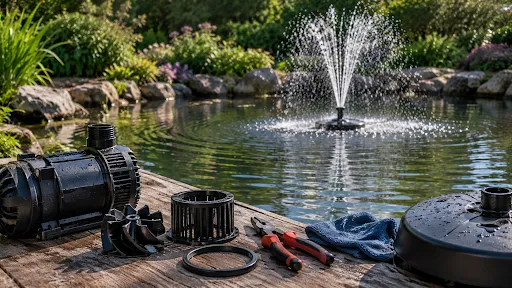
- Submersible pump with motor housing
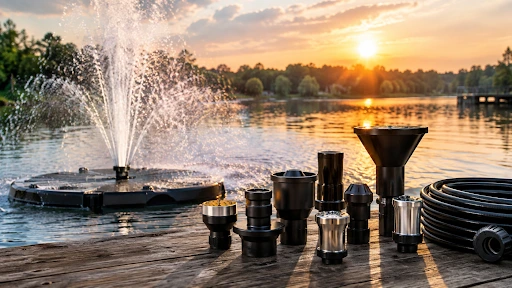
- Interchangeable fountain nozzle set (basic patterns)
- Power cable with waterproof connectors
- Mooring ropes or anchor points
- Intake screen or basic debris guard
- User installation manual and fittings kit
Replacement Nozzles: Thread Sizes, Patterns, and Compatibility
| Thread Size | Compatible Pump Size | Common Patterns | Typical Use |
| 1” FNPT | Small pumps (1/3 HP) | Geyser, tulip | Small decorative ponds |
| 1.5” FNPT | Medium pumps (1/2 HP) | Wide plume, gusher | Medium ponds |
| 2” FNPT | Large pumps (3/4 HP–1 HP) | High geyser, aerating jets | Large ponds/lakes |
Floating Fountain Base: Function, Material, and When Replacement Is Needed
A floating fountain base is the buoyant platform that holds the pump and nozzle assembly above water level. It provides stability and ensures correct spray orientation. It is typically made from UV-resistant polyethylene or closed-cell foam for durability and buoyancy.
When replacement is needed?
- Cracks or waterlogging reduce buoyancy
- Visible warping affects fountain’s balance
- UV damage causes brittleness over time
- Uneven floating or tilting occurs
- Anchor points become loose or damaged
Mooring Rope: Length, Material, and Correct Anchoring Technique
Mooring rope secures the fountain to prevent drifting. It maintains positioning while allowing controlled movement with wind and water flow. It is made from polypropylene, nylon, or UV-resistant synthetic fiber for strength and water resistance.
When replacement is needed?
- Fraying or visible fiber damage
- Loss of tension or elasticity
- UV degradation causing brittleness
- Knot slippage or anchor instability
- After 1–2 years of heavy outdoor use
LED Light Kits: What Is Included and How to Add One After Purchase
What it includes: LED light kits typically include submersible LED fixtures, a low-voltage transformer (12V), waterproof cables, mounting brackets, and a control system (manual or remote).
How to add an LED light kit post purchase?
To add one after purchase, lights are attached around the fountain float or nozzle assembly using clamps or brackets. Cables are routed along existing mooring lines and connected to a transformer placed on shore. Most modern kits are plug-and-play, allowing easy upgrades without modifying the pump system. Proper sealing and spacing ensure even illumination and safe underwater operation.
Mechanical Timers for Pond Fountains: How They Work and Why Use One
Mechanical timers control fountain operation by switching power on and off at preset intervals using a rotating dial mechanism. They allow scheduled operation (e.g., 8–12 hours daily), reducing energy consumption and extending pump life. Timers also help maintain consistent aeration cycles, prevent overheating, and support seasonal water management. They are especially useful in large ponds where continuous operation is unnecessary or costly.
Debris Protection Bags and Pump Guards: Purpose and Maintenance
Debris Protection Bags
Debris protection bags cover the pump intake and trap leaves, algae, and sediment before they enter the system. This reduces clogging, improves flow efficiency, and extends pump lifespan by minimizing wear on internal components and impeller damage.
Pump Guards
Pump guards are protective mesh or cage structures that shield the pump from large debris and aquatic life. They ensure consistent water intake, prevent blockages, and reduce maintenance frequency while maintaining safe, uninterrupted fountain operation in natural pond environments.
Conclusion
Choosing a floating pond fountain is ultimately about balancing performance, durability, and ease of maintenance across seasons. With the right setup, you can keep water clearer, healthier, and more visually appealing with minimal effort. For premium-quality systems and expert guidance, Friendly Fountains offers reliable solutions tailored to every pond size. Explore our range today and upgrade your pond with confidence and long-term efficiency.
FAQs
How long do floating pond fountains typically last?
Most floating pond fountains last 5–10 years, depending on usage, water quality, and maintenance. High-quality pumps and regular cleaning significantly extend overall operational lifespan.
Do pond fountains significantly increase electricity costs?
Operating costs vary by pump size and usage hours, but most modern pond fountains are energy-efficient, leading to relatively modest monthly electricity consumption for average residential ponds.
How noisy are floating pond fountains when running?
Most modern pond fountains operate quietly, producing only a soft water sound. Noise levels depend on pump quality, installation stability, and water depth.
Can I run my pond fountain all day and night?
Yes, continuous operation is common and often recommended for stable water quality. Many systems are designed for 24/7 use with proper maintenance.
Can I move my floating fountain to a different location in the pond?
Yes, floating fountains can be repositioned easily. However, anchoring adjustments are necessary to maintain stability and ensure optimal water coverage.