Electricity and water can be a dangerous combination, especially around pond fountains where people, pets, and wildlife may come into close contact with the water every day. That’s why a GFCI outlet (Ground Fault Circuit Interrupter) is an essential safety feature for any electrically powered fountain. It continuously monitors the flow of electricity and can cut power within milliseconds if it detects a ground fault, helping reduce the risk of electric shock before it becomes dangerous. This operation is what makes it a vital part of any pond ecosystem.
So, keep your pond ambience safe. Let’s understand what a GFCI outlet is, how it works, and why it is so important for pond fountains.
GFCI Outlet Safety OverviewA GFCI outlet is an essential safety feature for electrically powered pond fountains, helping reduce the risk of electric shock by detecting electrical faults and disconnecting power almost instantly. Because outdoor fountains are exposed to moisture, weather, and continuous operation, proper GFCI protection, installation, and routine maintenance are critical. Choosing the right outdoor setup and inspecting electrical components regularly helps create a safer, more reliable pond environment for years of worry-free enjoyment. |
What Is a GFCI Outlet in Electrical Systems?
Before diving into fountain-specific safety, it helps to understand exactly what a GFCI outlet is and how it functions in a standard electrical setup.
What Is a GFCI Outlet?
A GFCI outlet, short for Ground Fault Circuit Interrupter, is a specialized electrical outlet designed to help protect people and animals from electric shock. It monitors the electrical current flowing through a circuit and detects a ground fault, which occurs when electricity leaves its intended path and escapes through water, damaged wiring, or even a person’s body. Unlike a standard outlet, a GFCI outlet is specifically designed to sense this leakage and respond within milliseconds by shutting off the power before the situation becomes dangerous. This rapid response makes a GFCI outlet for fountain setups a critical safety feature for any pond connected to an outdoor power source.
How Does a GFCI Outlet Work?
A GFCI outlet works by constantly comparing the amount of electrical current leaving the outlet with the amount returning through the circuit. Under normal operation, these two values remain equal. But even if there is only a small imbalance, as little as a few milliamps, a GFCI can detect it, indicating that electricity is leaking somewhere it shouldn’t, often through water, damaged wiring, or a faulty component. When this happens, the outlet reacts almost instantly, typically within 20 to 30 milliseconds, cutting off the power to help prevent serious electric shock before it can occur. Most GFCI outlets also include TEST and RESET buttons, allowing owners to verify that the device is functioning correctly and restore power after it trips. The U.S. Consumer Product Safety Commission outlines this exact testing process as a key step in keeping GFCI protection reliable. For pond fountains, where electricity operates close to water, this rapid response provides an essential layer of protection.
Why Pond Fountains Require GFCI Protection
Not every outlet needs GFCI protection, but pond fountains are a clear exception. According to the Electrical Safety Foundation International, GFCI protection is essential in any indoor or outdoor area where water may come into contact with electrical products. Here’s what makes pond fountains a clear case for this protection.
Outdoor Pond Fountains Face Higher Electrical Risks
Unlike many indoor electrical devices, pond fountains operate in an environment where moisture is a constant factor. Rain, humidity, splashing water, and seasonal weather can all increase the exposure of pumps, power cords, and electrical connections to the elements. Since many floating pond fountains run for several hours a day or even continuously, normal wear can gradually affect their electrical components. In addition, leaves, dirt, wildlife, and routine landscaping around the pond can place extra stress on the system over time. Together, these conditions make outdoor fountains significantly more vulnerable to electrical faults than most indoor electrical devices, making proper electrical protection an essential part of safe, long-term operation. If you want to learn more about how these systems work, you can check our complete guide to floating pond fountains.
Why GFCI Protection Matters for Pond Owners
A pond is often more than just a landscape feature; it’s a place where families gather, pets explore, and homeowners perform routine maintenance. Cleaning the fountain, checking the pump, or replacing components can all bring you into close contact with water and electrical equipment. Knowing what a GFCI outlet is and how it functions helps pond owners understand why adding this protection provides an extra layer of safety against unexpected electrical faults, on top of regular inspections and maintenance. It’s a proactive safety measure that supports safer day-to-day operation by helping reduce electrical risks before they become serious problems.
From choosing the right outlet to keeping it running safely, Friendly Fountains has the expertise your pond setup actually needs.
How GFCI Outlets Improve Safety Around Water Features
A GFCI outlet does more than meet an electrical safety requirement; it actively helps reduce the everyday hazards of operating electrical equipment around a pond. Here are the key ways it improves safety for people, pets, and the water feature itself:
- Helps protect people from electric shock: By shutting off power quickly when an electrical issue is detected, a GFCI outlet helps reduce the chance of serious injury for anyone near the pond or handling fountain equipment.
- Adds protection for pets and wildlife: Animals that drink from or enter pond water may also be exposed to electrical hazards. GFCI protection helps reduce the possibility of animals becoming part of an unintended electrical path.
- Helps limit equipment damage: Disconnecting power when a problem occurs can help prevent further damage to pumps, wiring, and other electrical components.
- Protects unattended operation: Since many fountains operate for extended periods without supervision, a GFCI outlet provides continuous safety monitoring while the system is running.
- Supports safer long-term fountain use: Regular GFCI protection allows pond owners to maintain and enjoy their water features with an added layer of confidence over time.
Installation and Safety Considerations for Outdoor GFCI Outlets
Even the best GFCI outlet only works as well as its installation. This section covers what to get right and what to check on regularly.
Choose the Right Outdoor GFCI Setup
Outdoor GFCI outlets need more than just ground fault protection; they also need to be installed in a way that can handle outdoor conditions. That is why choosing the correct GFCI outlet, along with the right fountain parts and accessories, is an important step in creating a safer electrical setup for your pond fountain. Look for outlets that are rated for outdoor use and are paired with a weatherproof, in-use cover that keeps the connection protected from rain and moisture. Also make sure the outlet is positioned at a safe distance from the pond, following local code guidelines for water clearance. As InterNACHI notes, GFCI requirements for outdoor receptacles have been a part of electrical code for decades, making proper outdoor installation a well-established safety standard.
Maintaining GFCI Protection Over Time
A GFCI outlet only works reliably if it’s checked on a regular basis. Testing the outlet periodically using its TEST and RESET buttons confirms that it’s still tripping and resetting correctly. It is also important to inspect cords, plugs, and connections seasonally for cracks, fraying, or moisture damage, especially after heavy rain or winter weather. If an outlet fails to trip, doesn’t reset properly, or shows signs of wear, it should be replaced rather than repaired. Staying on top of these small checks helps keep your pond fountain running safely year-round.
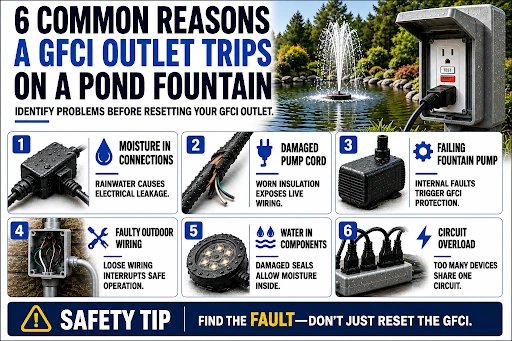
6 Common Reasons a GFCI Outlet Trips on a Pond Fountain
Even a properly installed GFCI outlet can trip unexpectedly, and knowing why it trips helps you fix the actual problem instead of just resetting it. Common causes include moisture in connections, damaged pump cords, and failing fountain pumps, along with faulty outdoor wiring, water inside components, or too many devices sharing one circuit. Rather than resetting repeatedly, identifying the specific fault first helps prevent recurring trips and protects your equipment. Use this quick visual guide to spot the issue before calling for help.
Conclusion
Pond safety shouldn’t be an afterthought; it’s part of building a fountain setup you can genuinely enjoy without worry. At Friendly Fountains, we design and supply pond fountains built with real-world safety in mind, backed by guidance that helps you install and maintain them the right way, season after season.
Start your next pond project with fountain experts who put performance, reliability, and customer support first.
Frequently Asked Questions About GFCI Outlets for Pond Fountains
How do I know if my fountain pump is causing electrical problems?
Signs may include frequent outlet trips, unusual noises, reduced performance, visible cord damage, or inconsistent operation.
How far should a GFCI outlet be from a pond fountain?
Most electrical codes require outlets to be at least 6 feet from the water’s edge, though exact clearance can vary by local jurisdiction and fountain size.
Can I plug multiple pond fountains into one GFCI outlet?
It depends on the outlet’s amperage rating and the combined power draw of the pumps, so checking total wattage against the circuit’s capacity is essential first.
Should I unplug my pond fountain during a thunderstorm?
Even with GFCI protection, unplugging fountains during severe lightning storms is recommended as an added precaution against power surges.
Should electrical connections for a fountain be buried underground?
Underground wiring should run through proper conduit and never sit in standing water, since exposed or buried unprotected wiring increases fault risk over time.