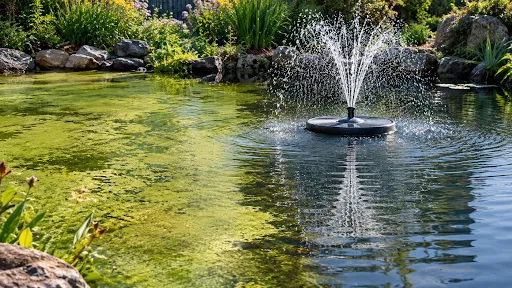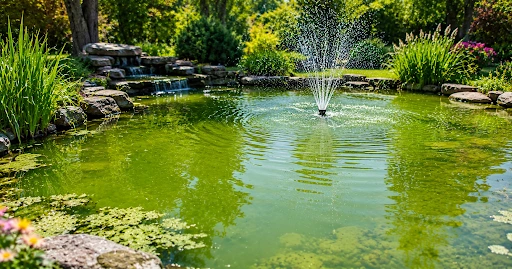
Are you witnessing green pond water? Well, if it’s just a little algae, it’s healthy, as your water friends are going to feed on it. It’s a part of a healthy ecosystem. The situation turns south when this algae starts to spread across a greater area of your pond. The reason could be warmer temperatures, excess nutrients, or maybe too much sunlight. All of this could lead to oxygen depletion, serious pH crashes, and, in the worst cases, a complete ecosystem collapse that takes your fish and plants down with it. Well, this is preventable!
Want to know why? First, let’s understand the science behind those green patches. In this blog, we’ll break down what causes them and share some highly effective ways to clear them up. So, let’s dive right in.
Pond Water Clarity: Key TakeawaysGreen pond water is typically caused by excessive algae growth fueled by surplus nutrients, sunlight, poor circulation, and imbalanced pond conditions. Effective control relies on reducing nutrient sources, improving aeration, maintaining proper filtration, encouraging beneficial bacteria, and limiting algae’s access to light. Natural solutions such as aquatic plants, pond dye, and barley straw can support long-term water clarity. Consistent pond care helps create a balanced ecosystem that remains healthy, clear, and resilient throughout the year. |
What Causes Green Pond Water in Ponds?
If you’re dealing with green water in the pond, chances are one or more of these factors are at play, and in most cases, it’s a combination of all of them working together.
Excess Nutrients (Nitrogen & Phosphorus)
Fish waste, uneaten food, decaying leaves, and bottom sludge all break down into nitrates and phosphates, algae’s primary fuel. Studies by the EPA confirm that excess nitrogen and phosphorus cause algae to grow faster than ecosystems can handle, turning your water green fast.
Too Much Direct Sunlight
Algae needs light to photosynthesize and multiply, and shallow ponds that are fully exposed to the sun warm up really fast, retaining heat and giving algae all the energy it needs to bloom, especially in late spring and summer.
Stagnant Water & Poor Circulation
When water stops moving and oxygen drops, the pond’s beneficial bacteria struggle to survive. And with no competition and no disruption, algae sits on the surface, soaks up sunlight, and multiplies undisturbed, turning your pond green fast.
Overstocking & Overfeeding Fish
Too many fish produce more waste than your filtration can handle, resulting in uneaten food decomposing rapidly. Both spike nutrient levels, directly giving algae exactly the fuel it needs to take over.
Weak or Undersized Filtration
When your filter is too small for your pond’s volume, nutrients accumulate unchecked in the water. Algae exploits this imbalance instantly and blooms faster than your system can clear it.
New Pond Syndrome
Brand new ponds that haven’t completed their nitrogen cycle yet can cause ammonia and nitrate spikes. Since beneficial bacteria haven’t established yet, algae is the only organism actively consuming those nutrients, turning new ponds green surprisingly fast.
Sediment Nutrient Release
Accumulated bottom sediment quietly stores phosphates and nitrates over time. So when they are disturbed, it releases them back into the water column by feeding algae blooms, even in otherwise well-maintained ponds.
Proven Methods to Clear and Prevent Green Pond Water
If you’re looking for how to clear green pond water fast, the key is tackling both the immediate bloom and the root cause driving it. Here’s exactly how to do both.
Feed Beneficial Bacteria to Starve Algae of Its Nutrients
The real magic is beneficial bacteria that consume the nitrites and ammonia algae feed on, starving them before it blooms. Don’t wait for it to build naturally; add bacteria treatments in liquid or granule form weekly, even after the water clears. Always turn off your UV clarifier 48 hours after dosing. UV kills bacteria, too. Also, skim debris and vacuum sludge regularly, and never overfeed fish.
Fix or Upgrade Your Filtration
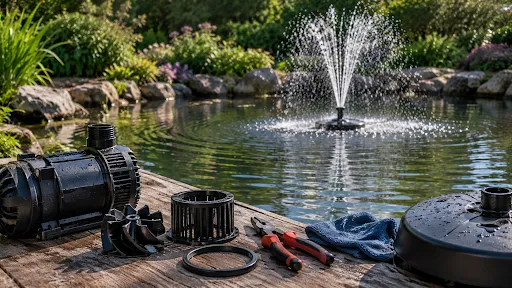
Your filter is your pond’s first line of defence, but if it’s undersized for your pond volume, nutrients accumulate faster than it can clear them, and algae wins every time. Good pond maintenance means choosing the right filter size and pairing it with regular cleaning and debris removal.
Improve Water Circulation & Aeration
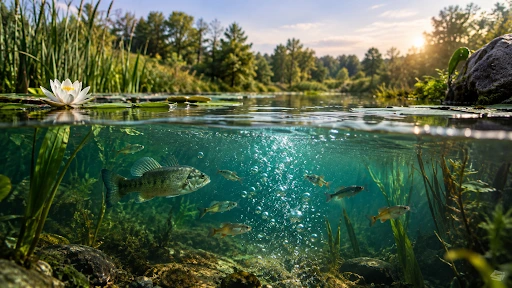
Stagnant water is algae’s best friend. The moment circulation stops and oxygen drops, algae take over. While waterfalls help, they only aerate the surface. You need aeration throughout the entire water column, pushing oxygen all the way to the bottom, where beneficial bacteria need it most to thrive and multiply. Floating pond fountains are one of the most effective ways to keep water moving, oxygenated, and algae-free consistently.
Use a UV Clarifier for Fast Results
A prominent way on how to clear green pond water fast is with a UV clarifier. It works by exposing free-floating algae to ultraviolet light, damaging their cells, causing them to clump together and get trapped by your filter. Most ponds clear within 3–7 days, completely chemical-free. Just make sure that it is correctly sized for your pond, and if the pond volume is too small, it simply won’t keep up.
Add Aquatic Plants for Natural Shading & Nutrient Absorption
Aquatic plants are your pond’s built-in defence system. They block sunlight from penetrating the surface and absorb the exact nutrients algae need to grow. Aim for 50–60% surface coverage using water lilies for shade, hornwort submerged to pull nutrients directly from the water, and marginal plants along the edges. The more surface they cover, the less light and food algae have access to starving it naturally without any chemicals.
Pond Dye to Block Sunlight
Blue pond dye & cleaner works by filtering and absorbing the specific UV wavelengths algae rely on for photosynthesis. No light, no growth. But it does more than block sunlight. It stabilizes water temperature, reducing stress on fish, plants, and beneficial bacteria. Just don’t rely on it alone; always pair it with beneficial bacteria and good filtration, so the root nutrient problem is tackled alongside the light issue.
Use Barley Straw as a Natural Algae Inhibitor
Barley straw is one of the most underrated natural solutions for green pond water. As it decomposes, it releases a hydrogen peroxide-like compound that inhibits algae growth without harming fish, plants, or your pond’s ecosystem. Simply place it in a mesh bag and float it in your pond. It’s slow-acting taking a few weeks to kick, so add it early in spring before algae gets the upper hand.
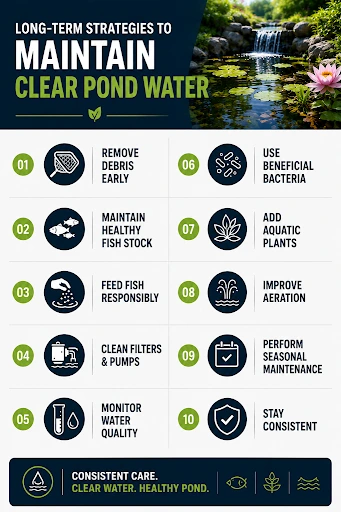
Long-Term Strategies to Maintain Clear Pond Water
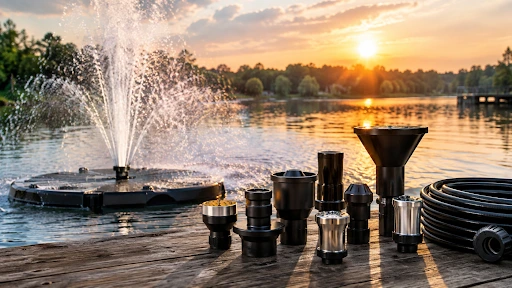
Here are some long-term strategies that help keep pond water clear, healthy, and balanced. By combining regular cleaning, proper fish management, adequate plant coverage, water quality monitoring, and effective aeration, pond owners can prevent algae growth and maintain a thriving ecosystem year-round. For aeration specifically, the right fountain makes a significant difference. You can also check our complete guide to floating pond fountains to find the best fit for your pond.
Conclusion
A clear, healthy pond doesn’t happen by accident. It requires the right balance of circulation, filtration, and aquatic plants working together to create a stable ecosystem. And once that balance is established, maintaining clear water becomes much easier. So if you’re ready to take the first step, Friendly Fountains offers everything from aeration solutions to essential pond care products designed to help keep your water crystal clear year-round. Contact us to explore our range and give your pond the care it deserves.
FAQs
Can rain make pond water turn green?
Yes. Rainwater can wash fertilizers, soil, and organic matter into the pond, increasing nutrient levels that encourage algae growth.
What time of year is green pond water most common?
Algae blooms are most common during late spring and summer when warmer temperatures and longer daylight hours accelerate algae growth.
What size UV clarifier do I need for my pond?
A general rule is 10 watts of UV power per 1,000 gallons. Always size up an underpowered unit simply won’t keep pace with algae growth.
How do I know if my pond filter is undersized?
If water stays green despite regular maintenance, your filter likely can’t handle your pond’s waste load. Your filter should process the full pond volume every 1–2 hours.
Can I use a fountain and a UV clarifier together?
Yes, they complement each other perfectly. The fountain handles aeration and circulation, while the UV clarifier targets free-floating algae cells simultaneously for faster, more complete results.