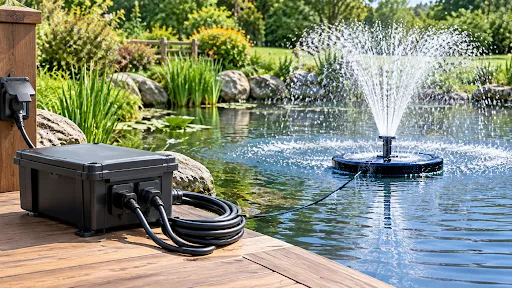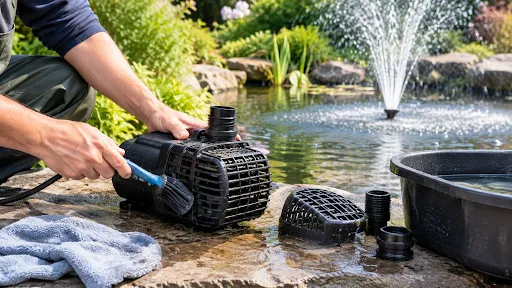
A pond fountain pump plays an important role in keeping water moving, but continuous operation can allow leaves, algae, sediment, and mineral deposits to accumulate around its components. As buildup increases, it can restrict water flow, reduce fountain performance, and place additional strain on the pump. Cleaning a fountain pump can restore proper circulation, but using excessive force, unsuitable cleaning agents, or improper handling may damage the impeller, intake screen, seals, or other components. The right cleaning approach depends on understanding how these parts function and which areas require careful attention during maintenance.
Before getting started, let’s explore when a pond fountain pump needs cleaning and how to clean it safely.
Pond Fountain Pump Care Summary GuideRegular pond fountain pump cleaning helps maintain strong water flow, efficient operation, and reliable fountain performance. Inspect pumps regularly for debris, algae, sediment, and mineral buildup, then safely remove, rinse, and clean components such as intake screens and impellers. Avoid abrasive tools, harsh chemicals, excessive disassembly, and inadequate water levels. Proper reassembly, component inspection, and timely replacement of worn parts can reduce unnecessary strain, extend pump life, and support consistent fountain operation. |
When Does a Pond Fountain Pump Need Cleaning?
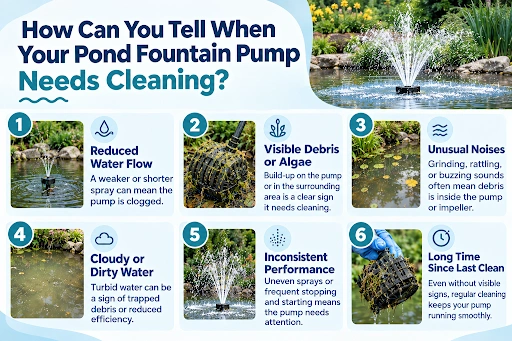
Cleaning is necessary when a pond fountain pump shows weaker water flow, an uneven fountain spray, or unusual operating noises. Visible debris, algae, sludge, and clogged intake screens are clear signs that fountain pump cleaning is necessary. Regular cleaning is especially important during warmer months when algae and organic matter build up faster. For most ponds, inspect the pump every 2–4 weeks and clean it whenever debris restricts water circulation. Prompt maintenance helps prevent overheating, reduces wear, and keeps the fountain operating efficiently.
Step-by-Step Guide to Cleaning a Pond Fountain Pump Safely
Follow these simple cleaning steps to remove buildup, protect pump components, and maintain smooth fountain operation; here it comes:
- Turn Off the Pump First: Start by switching off the fountain pump and unplugging it from the power source. Then, wait until the pump has completely stopped before removing it from the pond. Never clean or handle a powered pump, as water and electricity can create a serious safety risk. Proper pond pump maintenance begins with this essential safety step.
- Remove the Pump From the Pond: Next, carefully lift the pump out of the pond and place it on a stable surface. Do not pull the pump out by its electrical cord. Instead, hold the pump body firmly while removing it to prevent damage to the cord or connections.
- Remove Leaves and Debris: Then, remove leaves, twigs, algae, mud, and other debris from the outside of the pump. Check around the water intake because blocked openings can restrict water flow. Use your hands or a soft brush to loosen and remove the buildup without damaging the pump.
- Clean the Intake Screen: After that, inspect the intake screen for dirt, algae, and sediment blocking its openings. Rinse the screen with clean water and gently scrub stubborn buildup using a soft brush. Make sure every opening is clear so pond water pumps can draw water efficiently and maintain proper circulation.
- Clean the Impeller: Now, open the pump housing following the manufacturer’s instructions and locate the impeller. Remove any hair, algae, sludge, or small debris wrapped around it. Rinse the impeller and surrounding area with clean water, then check that the impeller spins freely without resistance. This step supports reliable operation for floating pond fountains.
- Rinse, Reassemble, and Test: Finally, rinse all parts thoroughly, reassemble the pump securely, and return it to the pond. Reconnect the power and observe the fountain. The water should flow smoothly with a consistent spray. If you are following a complete guide to floating pond fountain care, regular testing helps confirm proper performance after cleaning.
| Keep your pond fountain performing at its best with reliable fountain solutions and expert guidance from Friendly Fountains. |
Common Mistakes That Can Damage a Pond Fountain Pump During Cleaning
Small cleaning mistakes can reduce pump efficiency, damage components, and shorten equipment life, making careful maintenance essential, including:
Using Abrasive Tools on Pump Components
Using knives, metal scrapers, or stiff brushes to remove stubborn deposits can scratch plastic surfaces, damage the impeller, or weaken protective components. These small defects may affect water movement and create points where debris accumulates more easily during future operation, reducing the pump’s overall efficiency.
Applying Household Cleaners or Chemical Solutions
Household detergents, solvents, and concentrated cleaning chemicals can deteriorate seals and other pump materials over time. Residue may also remain on components after rinsing and enter the pond when the pump restarts. For routine maintenance, clean water and gentle mechanical cleaning are generally the safer approach.
Disassembling Parts Beyond the Recommended Level
Taking apart components that do not require routine cleaning can make reassembly difficult and increase the chance of misplaced parts or damaged connections. Only remove accessible components identified for maintenance in the manufacturer’s instructions, particularly around the motor housing and sealed electrical sections.
Running the Pump Without Adequate Water
After cleaning, starting a fountain pump before it is properly submerged can cause the motor to run without sufficient water for cooling and circulation. This can increase heat buildup and shorten motor life. Always ensure the pump is positioned at the correct operating depth before switching it on.
Neglecting Damaged Seals or Worn Components
Cleaning provides an opportunity to notice cracked seals, damaged impeller blades, loose fittings, or deteriorated housings. Continuing to operate a pump with compromised components can lead to leaks, vibration, poor circulation, or further damage. Replace worn parts according to the pump manufacturer’s specifications rather than forcing damaged components back into service.
Reassembling the Pump Without Checking Component Alignment
Improperly positioned covers, impellers, or intake components can interfere with normal operation and cause unusual vibration or reduced output. Before returning the pump to service, check that each removable part is seated correctly, the housing closes securely, and the impeller moves freely without obstruction.
Conclusion
Keeping your pond fountain pump clean helps maintain steady water flow, efficient operation, and dependable fountain performance over time. Friendly Fountains offers quality pond fountain solutions designed for reliable operation, along with expert guidance to help you choose, maintain, and get the most from your fountain system. With the right equipment and proper maintenance practices, pond owners can reduce unnecessary wear, support consistent performance, and enjoy a cleaner, more attractive water feature throughout the season.
| Keep your pond fountain performing beautifully with dependable solutions and expert guidance designed to support efficient, long-lasting operation. |
Frequently Asked Questions About Pond Fountain Pump Cleaning
Can I clean a pond fountain pump while it is still in the pond?
No. For safe and thorough maintenance, the pump should be removed from the pond. This allows you to inspect its components properly and clean areas that are difficult to reach underwater.
What are the benefits of keeping a fountain pump well maintained?
A well-maintained pump supports reliable water movement, consistent fountain height, efficient operation, and a healthier-looking water feature while helping reduce avoidable performance problems.
Can a fountain pump run continuously throughout the day?
Many fountain pumps are designed for extended or continuous operation, but suitability depends on the specific model. Always check its operating specifications and ensure adequate water levels and circulation conditions are maintained.
How can regular pump maintenance improve fountain performance?
Regular maintenance helps the pump maintain consistent water circulation, allowing the fountain to produce a stronger, more uniform display while supporting efficient operation throughout the season.
How can I make my pond fountain pump last longer?
Following the manufacturer’s maintenance recommendations, keeping the pond reasonably clean, monitoring performance, and addressing unusual changes early can help reduce unnecessary wear and extend the pump’s service life.