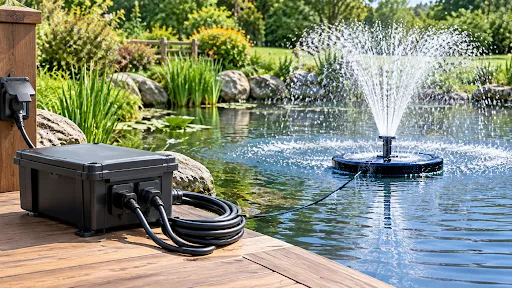
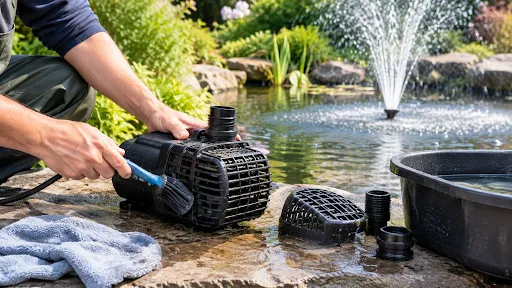
Standing water is a silent threat to any pond or lake, inviting algae blooms, mosquito breeding, and fish kills long before the problem becomes visible. Property owners searching for a fix are often met with two competing solutions: floating fountains and submersible aerators, both marketed as ways to boost water quality. Yet the two systems work in fundamentally different ways, targeting different depths, delivering different results, and suiting different budgets. A floating fountain oxygenates the surface layer while creating a decorative spray pattern, whereas a submersible aerator works from the pond floor upward, circulating the entire water column. Understanding this distinction matters because choosing the wrong system can leave deeper water starved of oxygen even as the surface looks perfectly healthy.
This guide breaks down how each technology functions, where it performs best, and which option truly fits your pond’s depth and goals.
Quick Overview: Fountain vs AeratorChoosing between a floating fountain vs aerator depends on pond depth, aeration goals, circulation needs, aesthetics, equipment placement, and operating considerations. Floating fountains provide surface movement, attractive spray displays, sound, and practical aeration, while submersible aerators promote deeper circulation and oxygen distribution. Understanding these differences helps determine whether a pond aerator or fountain better suits your pond’s requirements, particularly when balancing water management with visual appeal and landscape integration. |
What Is a Floating Fountain?
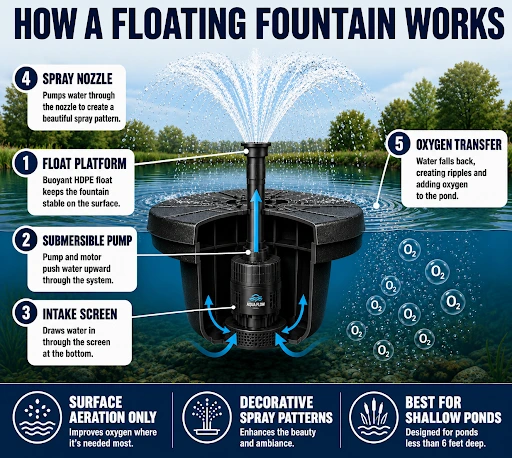
A floating fountain is a surface-mounted water feature built around a pump, float, and decorative nozzle. The unit draws pond water upward and pushes it through the nozzle, creating a visible spray or patterned display above the surface. The movement also increases contact between water and air, contributing to surface aeration. Different nozzle designs can produce varying spray shapes and heights, making floating fountains particularly suitable when water management and an attractive visual feature are both part of the pond design. Explore this complete guide to floating pond fountains to learn more about how these systems work and what to consider when choosing one.
| Add the gentle movement and sound of water to your outdoor space with a fountain designed to fit naturally into your setting. |
What Is a Submersible Aerator?
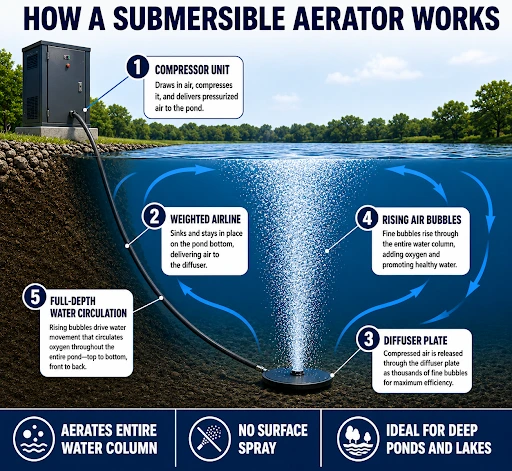
A submersible aerator is an underwater aeration system designed to move and oxygenate pond water below the surface. Rather than producing a decorative spray, it uses an underwater motor and propeller to draw surrounding water through the unit and circulate it vertically and horizontally.
This movement helps distribute oxygen within the water column and can improve circulation in areas where water movement is limited. Submersible aerators are particularly suited to ponds where the primary objective is water circulation and aeration rather than creating a visible fountain display.
Floating Fountain vs. Submersible Aerator: Key Differences
| Key Difference | Floating Fountain | Submersible Aerator |
| Aeration Depth | Primarily affects upper water layers. Provides surface oxygenation but has limited impact on deeper, oxygen-depleted areas. | Circulates water from the bottom upward, making it more effective for deeper ponds and deeper oxygen distribution. |
| Thermal Stratification | Improves surface mixing but has limited ability to disrupt strong temperature layers in deeper ponds. | Creates vertical circulation that more effectively disrupts thermal stratification and brings deeper water into circulation. |
| Aesthetic Impact | Provides a strong visual element through spray patterns, height, and moving water. Can serve as a decorative centerpiece. | Has minimal visual presence, typically showing only bubbles or surface movement. |
| Equipment Location | Pump and float assembly operate directly on the pond surface, with electrical equipment associated with the floating unit. | Compressor remains onshore, while airline tubing and diffusers extend into the pond. |
| Pond Depth & Application | Generally better suited to shallower ponds where surface circulation and visual appeal are priorities. | Increasingly advantageous for deeper ponds because the diffuser can be positioned near the bottom. |
| Energy & Operating Considerations | Energy use depends on pump size, spray height, water volume moved, and operating schedule. | Energy use depends on compressor output, diffuser depth, tubing length, and pond depth. |
| Primary Purpose | Prioritizes visual presentation, surface movement, and supplemental aeration. | Prioritizes whole-pond circulation, deeper oxygen distribution, and water-quality management. |
Why a Floating Fountain Works Better For Your Pond’s Needs
A floating fountain can be a practical addition when you want your pond to remain active, attractive, and easier to manage. According to research published through the National Institutes of Health (NIH), exposure to waterscapes can support psychological restoration and mental well-being. Beyond its basic operation, several practical considerations can influence whether it is the right fit for your property. Here’s why:
Creates a More Noticeable Pond Experience
A floating fountain turns water movement into a visible feature rather than keeping the pond’s improvement largely hidden underwater. The spray, sound, and movement can make the pond feel more active and intentional, particularly in landscaped or customer-facing spaces.
Helps Break Up Surface Algal Scums
The force of a fountain’s spray and resulting surface movement can disrupt floating algal scums and improve localized surface circulation. This can be useful where stagnant-looking surface water is an aesthetic concern, although fountains should not be treated as a standalone algae-control solution.
Improves Surface Gas Exchange
By repeatedly lifting pond water into the air and exposing it as droplets, a fountain increases contact between water and atmosphere. This supports oxygen transfer and can help disperse certain gases associated with stagnant water.
Makes Water-Quality Improvement Visible
Unlike a bottom aerator whose operation is mostly invisible, a fountain gives you an immediate visual indication that water is actively moving. For owners who want pond management and an attractive landscape feature in one installation, that visible activity can provide greater practical value.
Conclusion
Choosing the right pond system comes down to what you want your water feature to achieve. If you value effective surface movement and a stronger visual presence, a floating fountain can bring both function and beauty to your pond. Friendly Fountains offers floating fountain solutions designed to complement different pond settings and display preferences. Explore the collection to find a floating fountain that can enhance your pond’s appearance while supporting better water movement.
| Looking to add a stunning floating pond fountain to your place? Friendly Fountains brings you the entire collection of floating pond fountains that are designed for accurate performance, beauty, and long-lasting reliability. |
Frequently Asked Questions About Floating Fountain Vs Submersible Aerator
How long should I run a pond fountain each day?
The ideal operating schedule depends on pond conditions, fountain capacity, weather, and water-quality goals. Follow the manufacturer’s recommendations for safe, efficient operation.
Can a pond fountain help prevent algae?
Water movement may discourage stagnant conditions that contribute to algae problems, but fountains are not a standalone treatment for established algae growth.
Do floating fountains work in saltwater ponds?
Compatibility depends on the fountain’s construction materials and motor specifications. Check manufacturer guidelines before using a standard floating fountain in saline water.
Can floating fountains operate in ponds with fish?
Yes, fountains can be used in fish ponds when appropriately sized and installed. Proper circulation and oxygenation can contribute to healthier aquatic conditions.
How often should a floating fountain be cleaned?
Cleaning frequency depends on debris, vegetation, mineral buildup, and water conditions. Inspecting the intake and nozzle regularly helps maintain consistent fountain performance.
What happens if a pond fountain stops working?
Check the power supply, circuit protection, intake area, nozzle, and visible debris first. If the issue persists, consult the manufacturer’s troubleshooting instructions or service provider.