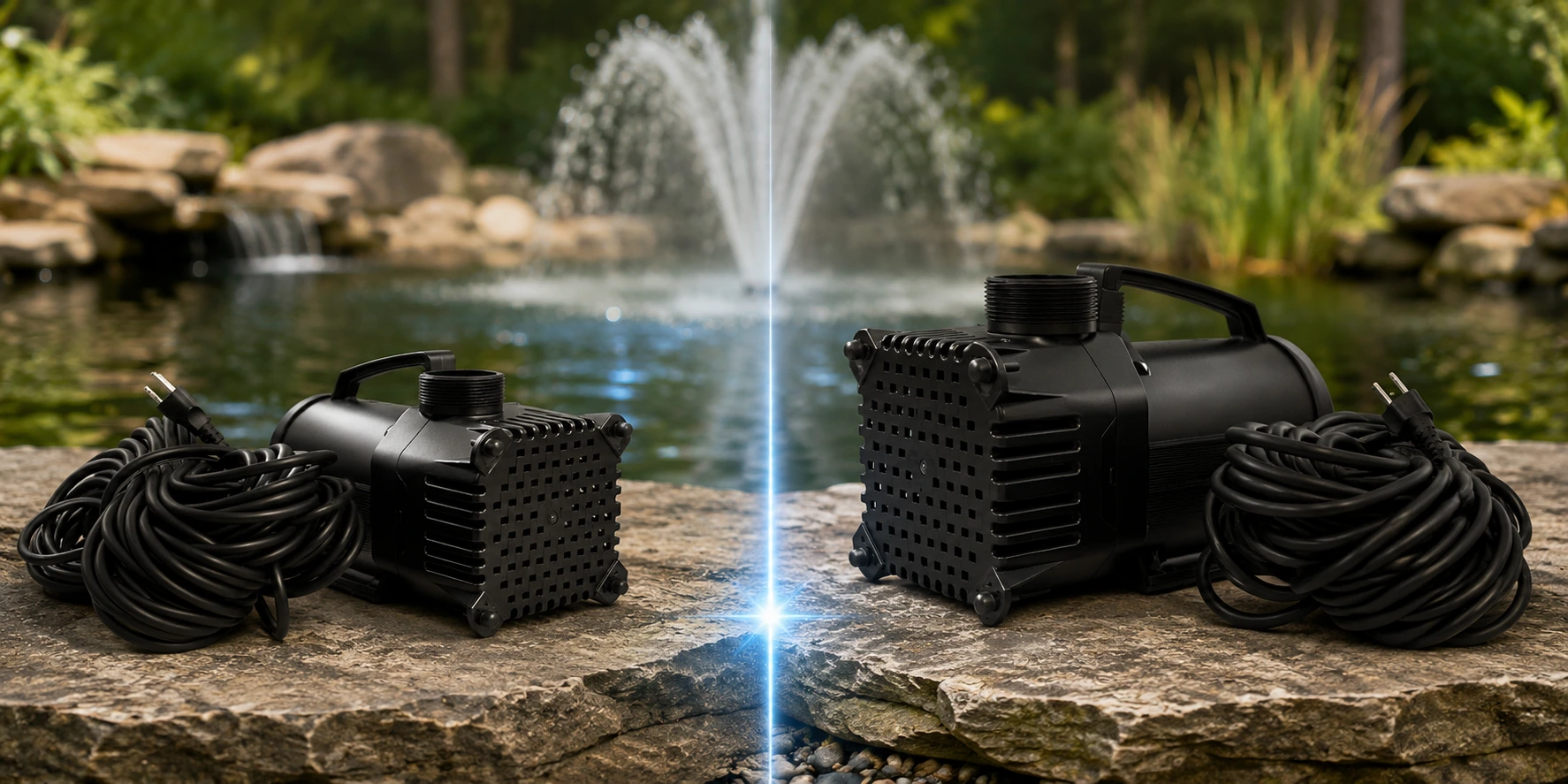
When one is choosing a pond fountain pump, to maintain healthy water circulation, the 2 top options that come forth are 1/3 HP and 1/2 HP fountain pumps for ponds. While both may appear similar at first glance, they are designed for very different pond sizes, water depths, spray patterns, and operating demands. If you choose a pump that is too small, it may struggle to circulate water effectively, while if you choose an oversized pump, it can consume unnecessary electricity, create excessive water movement, and increase maintenance costs over time. Hence, understanding factors such as gallons per minute (GPM), spray height, head pressure, and pond volume of both these pumps is vital in selecting the correct horsepower.
In this guide, we’ll compare 1/3 HP and 1/2 HP pond fountain pumps so you can confidently choose the best option for your pond or water feature.
Pond Fountain Pump Selection OverviewChoosing between a 1/3 HP and 1/2 HP pond fountain pump depends on pond size, water volume, fountain goals, pipe setup, and climate conditions. A 1/3 HP pump works well for small to medium decorative ponds, while a 1/2 HP pump provides stronger flow, higher fountain displays, and better aeration for larger ponds, koi ponds, and warmer climates. Proper pond volume calculations, pipe sizing, and water temperature considerations help ensure efficient circulation, healthy oxygen levels, and long-term pump performance. |
What Does HP Mean in a Pond Fountain Pump?
HP, or horsepower, is a unit that measures how much power a pump for a water fountain can produce. The fountain can tell you how much water a pump can move, how high it can raise, and how well it helps the water flow from the fountain.
A higher HP means more horsepower, which can also affect two things: its flow rate (how much water moves per hour) and head height (how high the water can reach). Both factors can decide whether your pump can keep your pond clean and well-circulated.
1/3 HP vs 1/2 HP Pond Fountain Pump: Key Differences
A 1/3 HP and a 1/2 HP pond fountain pump can differ in more ways. Here is a simple difference to help you compare:
| Feature | 1/3 HP Pump | 1/2 HP Pump |
| Power Output | Lower power | Higher power |
| Best Pond Size | Small to medium ponds | Medium to large ponds |
| Flow Rate | Moderate flow | Stronger, higher flow |
| Head Height | Lower vertical reach | Higher vertical reach |
| Energy Consumption | Uses less electricity | Uses more electricity |
| Noise Level | Generally quieter | Slightly louder |
| Fountain Display | Smaller, modest displays | Larger, more dramatic displays |
| Maintenance | Less strain on the motor | Motor works harder over time |
| Best For | Decorative small fountains | Large displays, aeration needs |
How to Choose the Right HP Based on Pond Size and Purpose?
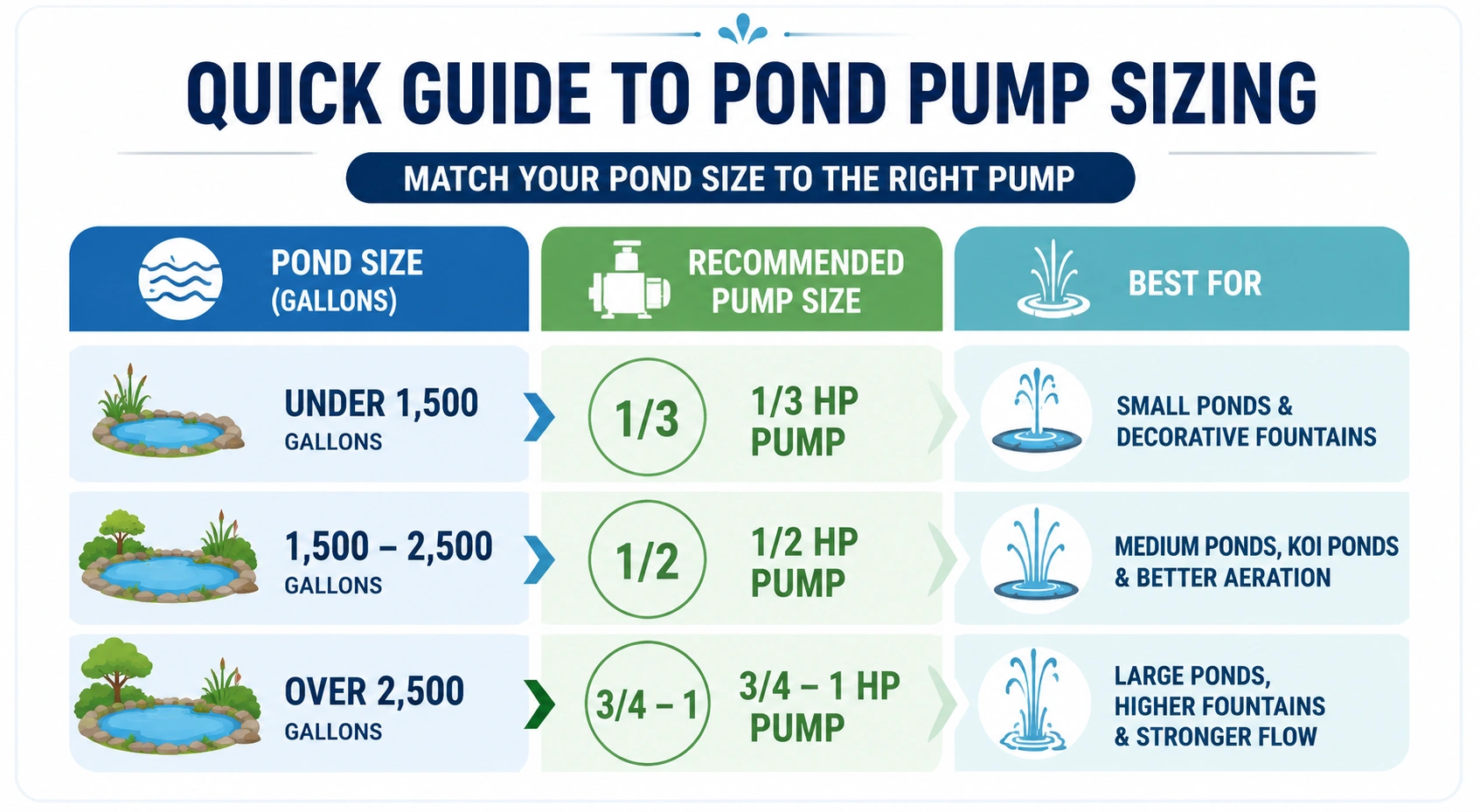
The chart above is a great starting point, but choosing the right pump depends on more than just pond size. Read the points below to learn what else can affect your pump choice.
Measure Your Pond Volume First
Before choosing a pond pump, find out how many gallons of water your pond can hold. Then measure the pond’s length, width, and depth in feet, then use this formula for a rectangular pond:
- Rectangular: Length × Width × Depth × 7.48
- Circular: Diameter × Diameter × Depth × 5.9
- Irregular: Length × Width × Depth × 6.7
The result gives you the total gallons of water your pump may need.
Choosing the Right HP Based on Pond Volume
Once you know your pond’s volume, picking the right HP for a pump is easy. Ponds under 500 gallons work fine with a 1/3 hp pond fountain, as well as ponds between 500 and 1,500 gallons, too. Ponds between 1,500 and 2,500 gallons have a tricky middle ground, and a 1/2 HP pump is usually the safer choice. Ponds between 2,500 and 3,500 gallons need at least a 1/2 HP pump. For anything bigger than 3,500 gallons, go for a 3/4 HP or 1 HP pump.
Pump Choices for Different Pond Needs
Different ponds have different needs. For a smaller decorative pond under 1,200 gallons, a 1/3 HP pump is best, and for a simple fountain also. Koi ponds create more waste, so they usually need a stronger pump, like a 1/2 HP pump. Whereas wildlife ponds, which are more focused on oxygen levels, also need a better system with a 1/2 hp pond fountain and a diffuser.
Pipe Diameter and Length
The right pipe size and length can affect how much water reaches your fountain. A 3/4 inch diameter pipe with over 10 feet in length will lose 10 to 15% of the water flow, meanwhile a thicker one (i. e. 1inch) will only lose up to 4 to 6%. The more bends in the pipe, the more resistance it has; as a result, you will have an increase of 2 to 3 feet. If your pipe is more than 20 feet or more of the latter and has numerous bends, you will need to go for a 1/2 HP Pump. If you want to consistently learn how to install a water pump in a fountain properly, knowledge about pipe size and its position is fundamental to know how to prevent the loss of the flow.
Adjust for Climate and Water Temperature
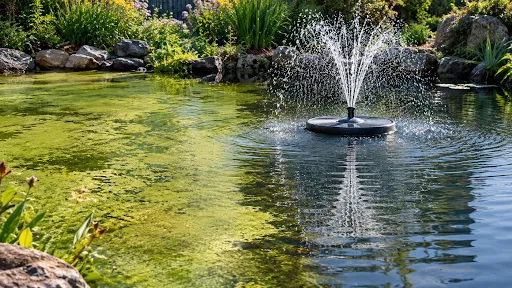
Water temperature affects oxygen levels as warm water holds less oxygen. Cooler water holds more oxygen, but as the water gets warmer, the oxygen level drops. If summers in your area get hotter than 85°F, a 1/3 HP pump may struggle to keep a 1,200 to 1,500-gallon pond clean, which can lead to algae. The 1/2 HP fountain pumps for ponds can handle heat better than a 1/3 HP pump and keep oxygen levels steady.
If you want more help setting up your pond, you can take a look at this complete guide to floating pond fountains.
Conclusion
Picking the right pond fountain pump doesn’t have to be that hard to find. Friendly Fountains has several variant options for 1/3 HP & 1/2 HP pumps that are suitable for different ponds, both in size and style. But, if you want to be assisted with the right sizing, fountain pump installation, or look for the right match for your pond, our team will be happy to guide you all along.
Want to upgrade your pond? Shop fountain pumps at Friendly Fountains today and bring your water feature to life!
FAQ’s
Does cold winter weather affect how a pump works?
Yes, very cold weather can damage your pump or stop it from working. In cold areas, you may need to take the pump out for winter or keep it running so it doesn’t freeze.
Are there solar-powered versions for these 1/2 HP and 1/3 HP fountain pumps?
Solar versions are easier to find for smaller 1/3 HP pumps. But for 1/2 HP pumps, you can find hybrid solar-electric options, but fully solar-powered ones are rare to find.
How can I tell if my pump is too weak for my pond?
If your water starts to look cloudy, or has algae, the fountain flow is weak, or if there’s a bad smell, your pump may be too small, even if you clean your pond regularly.
Can I switch from a 1/3 HP pump to a 1/2 HP pump later?
Yes, you can switch later when you need. Just make sure your pipes, fittings, and electrical setup can handle the stronger 1/2 HP pump before you upgrade.
Is it okay for the pump to run all day and night?
Yes, that’s a normal thing. Most pond pumps are made to run all the time. This will help to keep the water clean, add oxygen, and stop the pond from going dusty.