When choosing a pond fountain, we often focus on spray pattern, design, and aesthetics. However, understanding what GPH is and its role in your system significantly impacts the performance of a pond fountain. Short for gallons per hour, GPH indicates how much water a fountain pump can move, influencing everything from water circulation to the appearance of the fountain display. The right flow rate helps keep water moving efficiently throughout the pond, supporting better water quality. On the other hand, a pump that is too powerful or too weak may not deliver the results you expect.
In this blog, we break down exactly what GPH means, why it matters for pond fountains, and how to use it as a practical guide when comparing pumps and fountain systems. Let’s begin!
Key Takeaways on GPH of Pond Fountains at a GlanceGPH is a critical specification that determines how effectively a pond fountain operates, influencing everything from system efficiency to long-term reliability. Selecting the right flow rate requires considering factors such as pond volume, nozzle requirements, head height, wind exposure, fish population, and additional water features. Beyond fountain operation, an appropriate GPH supports water mixing, oxygen exchange, and a fuller, more defined display, helping the fountain perform consistently while maintaining its visual impact throughout changing pond conditions. |
What Does GPH Mean in a Pond Fountain System?
Think of gallons per hour for water pumps for small fountains or large fountains as the literal heartbeat of your pond’s foundation. It matters so much because it dictates the overall health, clarity, and life of your water feature. Moving the right volume of water every hour is what prevents nasty stagnant spots, blends warm and cool water layers, and keeps oxygen pumping through the entire basin. Without the right GPH capacity as your baseline, the whole ecosystem struggles with muck and algae buildup. It’s the ultimate foundation for a clean pond, while safely delivering just the right amount of flow to your fountain nozzle.
Why GPH Is Important for Pond Fountain Performance?
When a pump consistently operates outside its intended flow range, it puts unnecessary strain on the fountain system. Over time, this extra stress can increase wear on internal components, leading to more frequent maintenance and higher operating costs. A properly sized pump allows water to move through the system as intended, helping the fountain run more smoothly and efficiently. If you are still wondering what GPH is going to do to affect longevity, the answer lies in mechanical resistance.
GPH also becomes increasingly important as pond conditions change throughout the year. Higher summer temperatures accelerate evaporation and fluctuate water levels, while seasonal debris like leaves and pollen increases. A correctly sized GPH helps the fountain handle these changing conditions effectively, maintaining consistent performance and operating reliably with fewer maintenance concerns
How to Select the Right GPH for Your Pond Fountain?
|
Selection Factor |
GPH Consideration |
| Pond Volume | As a general rule, choose a pump capable of circulating the entire pond volume every 1–2 hours. |
| Fountain Nozzle Type | Always select a pump that falls within the nozzle manufacturer’s recommended GPH range. Decorative and multi-tier nozzles typically require higher flow rates. |
| Head Height | Increase the target GPH as the fountain height increases, since pumps lose flow as water is pushed upward. Use the pump’s flow chart rather than the advertised maximum GPH. |
| Wind Exposure | Windy locations often benefit from moderate GPH levels that maintain an attractive display without excessive overspray and water loss. |
| Future Expansion | If additional water features may be added later, selecting a slightly higher-capacity pump can prevent costly upgrades. |
| Energy Costs | If high GPH is needed, consider a variable-speed pump that allows flow adjustments while reducing electricity consumption. |
To balance efficiency and beauty in your backyard setup, explore our premium water pump for garden ponds collection to find the perfect fit.
How GPH Impacts Water Flow, Oxygenation, and Aesthetic Output?
One of the lesser-known effects of GPH is how it alters your pond’s environment from the bottom floor to the visual display in the air. Here is exactly how that flow rate impacts your water movement, oxygen levels, and overall look.
Water Flow and Layer Mixing
An appropriate flow rate helps move water between the surface and lower depths, reducing temperature stratification during warmer months. This creates more consistent conditions throughout the pond instead of allowing separate warm and cool water zones to develop. No matter the size of the pond, defining what is GPH capability for your specific body of water is the secret to avoiding stagnant spots.
Oxygenation and Surface Agitation
GPH directly affects the amount of surface disruption created by the fountain. Since oxygen enters the water primarily at the surface, the degree of agitation generated by the fountain influences how efficiently oxygen is exchanged with the surrounding air. This becomes particularly important in ponds that experience prolonged heat, where oxygen demand is often at its highest. For smaller landscapes, using dedicated small fountain pumps provides just enough surface agitation to keep the water healthy without causing turbulent currents.
Aesthetic Output and Display Density
From an aesthetic perspective, GPH contributes to the visual density of a fountain display. Beyond spray height, it affects how solid, uniform, and defined the water pattern appears from a distance. Finding the right water pumps for small fountains or larger pond systems ensures a properly balanced flow. This creates a fuller display with cleaner lines, helping the fountain maintain its visual appeal from multiple viewing angles across the landscape.
5 Quick Clues Your Pond Fountain’s GPH Is Off
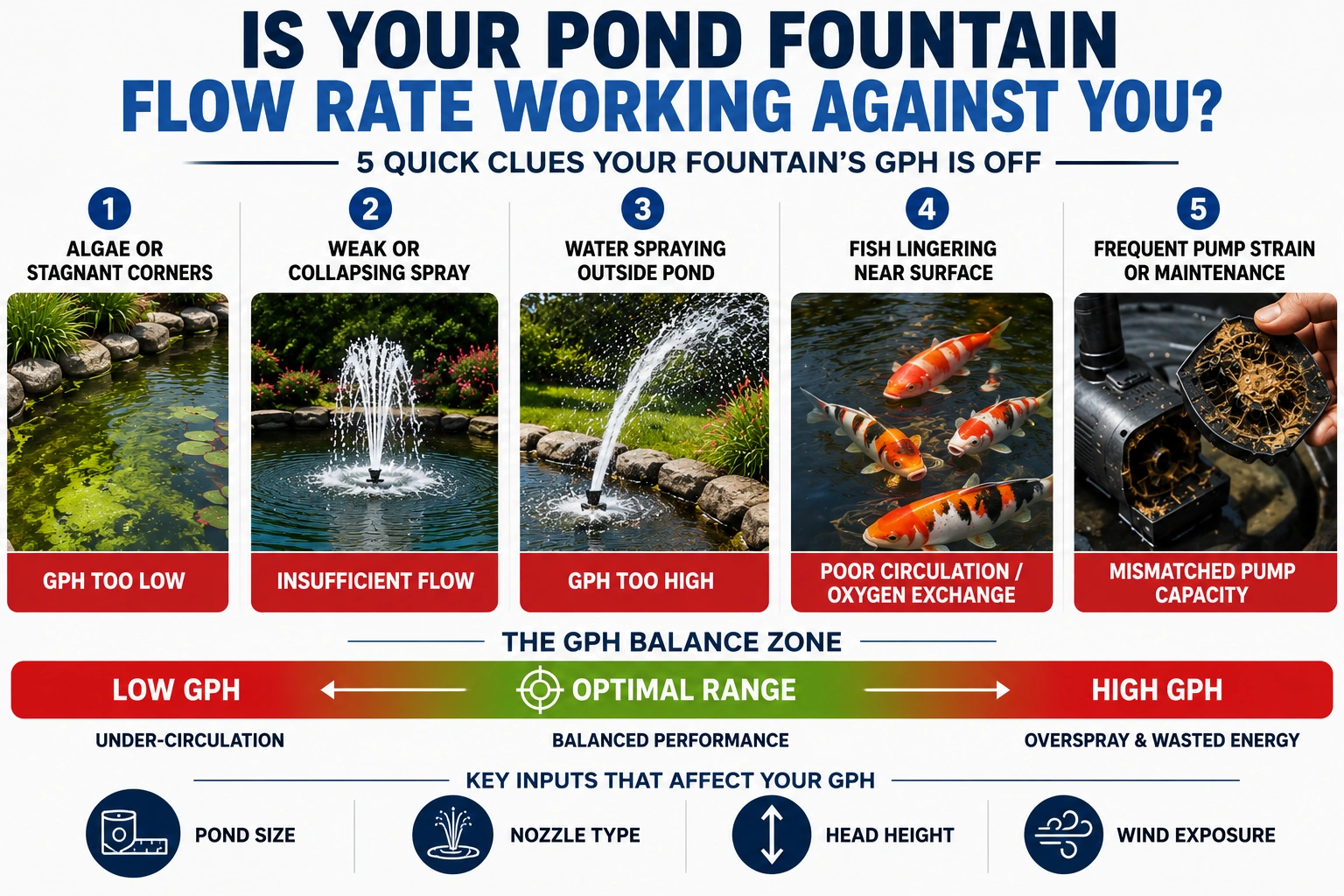
This infographic highlights five common warning signs that your pond fountain may be operating with an incorrect GPH. It also shows the ideal GPH balance zone, where water flow supports efficient operation without causing unnecessary strain or water loss. Understanding these visual clues can help pond owners identify flow-related problems early and maintain more consistent fountain performance.
Upgrade your landscape today with our high-efficiency floating pond fountain for stunning, reliable water displays.
Conclusion
As important as fountain design and appearance may be, selecting the right GPH is what allows the entire system to perform at its best. From supporting reliable operation to accommodating your pond’s unique conditions, the right flow rate can make a noticeable difference in long-term results. At Friendly Fountains, we offer high-quality pond fountains and commercial water fountain pumps alongside expert guidance to help you choose the ideal solution for your pond, ensuring lasting performance, efficiency, and visual appeal.
FAQ’s
Can I run a pond fountain continuously?
Yes. Most pond fountain systems are designed for continuous operation, though regular inspections and routine cleaning help maintain reliable performance.
How often should a pond fountain pump be cleaned?
Cleaning frequency depends on debris levels, fish load, and surrounding vegetation. Most pumps benefit from periodic inspections to prevent buildup that can restrict performance.
Can a single pump power multiple fountain heads?
Yes, provided the pump has sufficient capacity to meet the combined flow requirements of all connected fountain features.
How long does a pond fountain pump typically last?
Lifespan varies by pump quality, operating conditions, and maintenance practices, but many well-maintained pumps remain operational for several years.
Can seasonal algae growth affect GPH?
Yes. Algae buildup can restrict water intake areas and plumbing components, reducing overall flow through the fountain system.